TL;DR
- Contract manufacturing covers a range of services: companies can outsource one task, such as assembly or packaging, or the entire production process.
- Speed comes from using existing production lines and expertise.
- Ownership is negotiated, not assumed, so design, tooling, and IP rights belong in the contract.
- Outsourcing production does not outsource accountability for quality or compliance.
- Many of today’s biggest brands own their designs, not necessarily their factories.
What Is Contract Manufacturing?
Contract manufacturing is a production model in which a company hires a third-party provider to make goods according to agreed designs and specifications. The work can include making parts, fitting ready-made components into subassemblies or finished units, and testing and packaging them, using the provider’s facilities, equipment, and staff, while the company keeps ownership of the product.
How Does Contract Manufacturing Work?
The contract manufacturing workflow typically follows these steps:
Requesting A Quote
The client shares what defines the work, such as drawings, 3D models, samples, parts lists, tolerances, quality requirements, quantities, and deadlines.
The contractor reviews this package for feasibility, flags features that would be difficult or costly to produce, and prices the job based on the materials, complexity, finishing, order volume, and any tooling required.
Agreeing On The Terms
With the scope settled, both sides sign an agreement that establishes pricing, volumes, delivery schedules, and quality standards.
A well-drafted contract also defines what will be inspected and what counts as an acceptable part, who owns any custom tooling, and how intellectual property and confidential data are protected, so expectations are clear before any work starts on the production floor.
Preparing And Testing The Process
Depending on the job, setup can involve building molds, dies, or fixtures, buying materials, producing samples or prototypes for the client to approve, and running a short pilot batch to identify problems with fit, cycle times, or defect rates. For simpler tasks like assembly or repacking, a brief trial run is often enough.
Starting Production And Monitoring Quality
After the client approves samples, full-scale work begins. Quality checks are built into the line or carried out after each batch. Records may link finished units or batches to work orders and material lots, depending on traceability requirements.
On ongoing contracts, new runs are often scheduled against the client’s forecasts or sales data, so output follows demand without building excess stock.
Testing Finished Goods And Preparing For Delivery
Finished goods go through final testing or inspection, which may cover every unit or a sample from each batch, and are then packed and labeled according to the client’s instructions. Depending on the contract logistics arrangements, they are shipped to the client’s facility, a distributor, or straight to end customers.
The Contract Manufacturer (CM) hands over the required inspection records and may keep tooling and digital files on hand, so repeat orders can start without a full setup.
Types Of Contract Manufacturing
Contract manufacturing takes several forms depending on the extent of outsourced production, the manufacturing processes involved, and the responsibilities assigned to the contractor.
Contract Manufacturing Models By Production Scope
Full-Product / Turnkey Manufacturing
The contractor manages the production process end-to-end, from material procurement and component fabrication to final assembly, testing, and packaging.
Assembly And Sub-Assembly
The CM provider can handle light assembly, such as joining a handful of ready-made parts into a finished unit, producing sub-assemblies that form self-contained modules for integration into larger products, or undertaking complex projects requiring custom fixtures.
Subcontract Manufacturing
The subcontractor takes on one defined piece of a larger job, either making individual parts to the client’s drawings or performing a single specialized operation such as laser cutting, metal stamping, or finishing. The client or another contractor then builds those outputs into the final product.
Contract Packaging (Co-Packing)
The contract packager handles packing and labeling, sometimes under strict regulatory requirements. Specialized 3PLs often provide this service alongside assembly operations.
Capacity Outsourcing
The contractor supplies production capacity rather than a defined output, such as machine time, or space on a production line. Manufacturers use these arrangements to cover short runs or demand peaks without buying equipment or adding permanent staff.
Contract Manufacturing Types By Design And Ownership
Original Equipment Manufacturing (OEM)
The client owns the design, specifications, and related Intellectual Property (IP), while the provider develops a production process around them. However, the latter may retain ownership of its pre-existing technology, manufacturing processes, or tooling, depending on the agreement.
Note: The term “original equipment manufacturer” can refer to either the brand owner or the contract manufacturer, depending on the industry and context, so contracts should clearly define each party’s role.
Original Design Manufacturing (ODM)
The production partner designs and manufactures the product, often adapting it to the client’s requirements. The contractor typically retains the design IP, while the client sells the finished product under its own brand.
Toll Manufacturing: A Different Approach
In standard contract manufacturing, the provider typically buys the raw materials, and its price covers materials, production, and a markup. Conversely, in toll manufacturing, the client supplies the materials and pays a processing fee covering labor, equipment, and related costs.
This gives the client more control over material grade and cost but also leaves it carrying greater material-related risks. Some sources treat toll manufacturing as a separate model.
Joint Development And Manufacturing
The external provider helps design and engineer the product and handles production. Since both parties contribute to its development, the contract should clearly define IP ownership. In pharmaceuticals and related industries, this type of arrangement often involves Contract Development and Manufacturing Organizations (CDMOs).
Contract Manufacturing vs Private Label
In contract manufacturing, brands typically control the product design, specifications, and associated intellectual property. The contractor manufactures products according to agreed specifications, offering greater opportunities for product differentiation.
However, custom manufacturing may require greater upfront investment and development time for tooling and prototyping.
Private label manufacturing, on the other hand, involves purchasing an existing product typically designed and owned by the manufacturer. The company sells the product under its own brand, often with customized labeling, packaging, or minor product changes.
This approach can reduce development costs and shorten time-to-market, but typically allows less design customization and product exclusivity.
Industry-Specific Contract Manufacturers
Some manufacturing contractors specialize in particular industries.
Electronics Manufacturing Services (EMS) providers, for example, focus on circuit board assembly, cable harnesses, and complete electronic units, while Contract Manufacturing Organizations (CMOs) produce pharmaceutical products under strict quality standards, including Current Good Manufacturing Practice (cGMP) requirements.
Benefits Of Contract Manufacturing
Contract manufacturing offers businesses different opportunities to expand production, access specialized expertise, and control costs without investing in additional in-house resources.
Key advantages include:
Cost Savings & Capital Efficiency
Businesses can avoid large upfront investments in factory space, heavy machinery, equipment maintenance, and permanent production staff. Instead of maintaining their own manufacturing facilities, they pay an external manufacturer for the production work they need, keeping costs aligned with demand.
Economies Of Scale
Contract manufacturers produce high volumes across multiple client accounts. This enables them to negotiate bulk raw material discounts and achieve higher equipment utilization rates – ultimately lowering per-unit piece prices.
Rapid Time-To-Market
Established production lines, existing vendor networks, and experienced shop-floor staff can help new products move from prototype to commercial distribution much faster than building internal factory capacity.
Flexibility & Scalability
Production volumes can be scaled rapidly in response to market spikes or order changes without incurring long-term labor liabilities or idle facility costs.
Access To Advanced Technical Expertise
Client companies leverage specialized process engineers, quality management systems, and Design for Manufacturability (DFM) insights without keeping full-time industrial specialists on payroll.
Lower Barrier To Entry For Startups & SMBs
Startups and smaller businesses with limited capital can bring complex physical products to market and even compete on an equal footing with industry giants without building an expensive factory footprint.
Regional Cost And Logistics Advantages
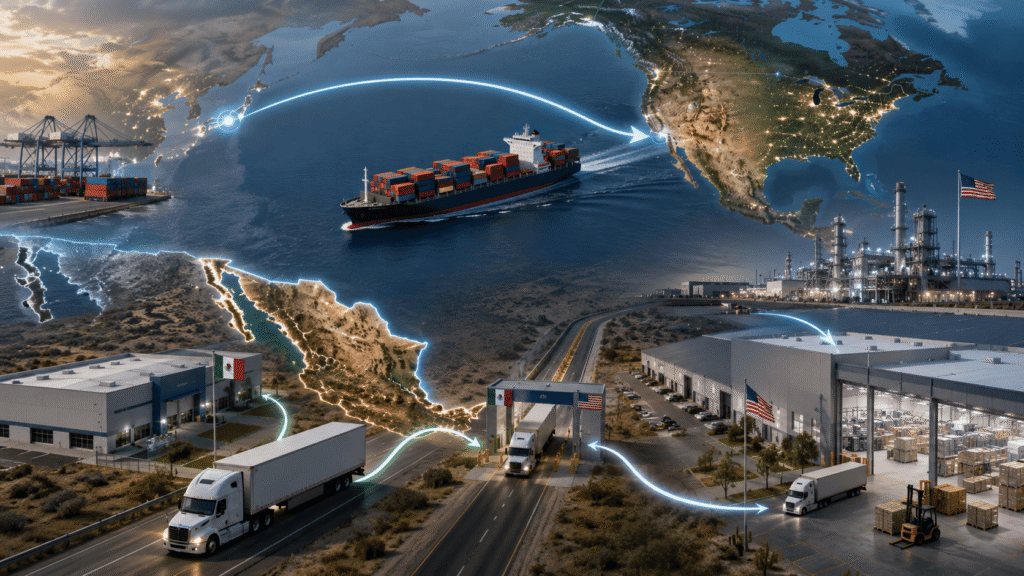
Contract manufacturing lets a company move part of its production to a region that offers favorable manufacturing conditions, such as lower operating costs, a more experienced workforce, or a location close to its customers.
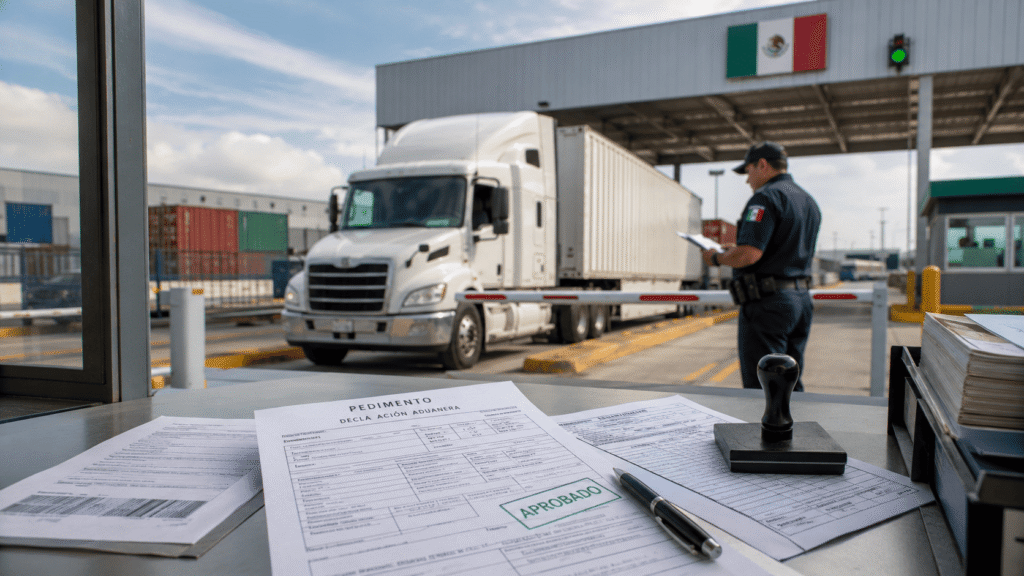
Regional trade agreements and export programs, such as Mexico’s IMMEX, may also reduce or defer import duties on qualifying goods.
Contract Manufacturing Examples & Use Cases
Companies turn to contract manufacturing for different reasons, from expanding production to reducing supply chain risks. Here are some examples from major global brands.
Outsourcing Finished-Goods Manufacturing At Scale
Nike outsources nearly all its footwear and apparel production to independent contract manufacturers. In fiscal 2026, 15 contractors manufactured Nike footwear across 95 factories in 11 countries, while 64 contractors produced apparel across 321 factories in 34 countries.
The arrangement enables Nike to coordinate global manufacturing without owning its production factories, allowing the company to concentrate on product development, branding, marketing, and distribution.
Accessing Specialized Expertise Without In-House Investment
NVIDIA outsources semiconductor production to specialized foundries, including TSMC and Samsung, while other contractors handle product assembly, testing, and packaging.
By working with external specialists, the company can access advanced semiconductor fabrication, packaging, and assembly capabilities without independently developing every stage of production infrastructure.
Diversifying Supply Chains Through Contract Manufacturing
Apple Inc. expanded its iPhone contract manufacturing operations in India to reduce its dependence on China and limit exposure to U.S.-China trade tensions and tariffs.
By spreading production across multiple countries and manufacturing partners, the company can reduce supply chain risks and increase production flexibility without operating its own factories.
Looking For Light Assembly Services In Tijuana?
Loginam provides light assembly and kitting in Tijuana, building kits and finished units to each client’s specifications under Mexico’s IMMEX program.
If your company is weighing contract manufacturing, Loginam’s capabilities bring final production steps closer to U.S. customers without giving up control over your products or brand.
The last steps of production deserve the right partner. Contact us today!