The best supply chains are built with intention, and choosing where to operate is one of the most strategic decisions a company can make.
Nearshoring, offshoring, and reshoring – each solve for something different, giving companies what they need to build a model that plays to their strengths.
TL;DR
- Nearshoring moves business operations to a nearby country to lower costs while keeping oversight within practical reach.
- Offshoring places work in a distant country mainly to reduce operating costs, though it can increase supply chain risk.
- Reshoring brings overseas operations back home to improve control and resilience, usually at a higher operating cost.
- Mexico is a major nearshoring destination for U.S. companies because it offers proximity, trade advantages, and access to a skilled workforce.
What Is Nearshoring?
Nearshoring is the practice of relocating business operations or services to a nearby country, typically close to the company’s central operations or primary customer base.
Businesses nearshore certain production, logistics, or other functions to reduce costs, address labor and capacity constraints, or bring offshore operations closer to home. That proximity reduces exposure to supply chain disruptions while providing similar time zones, easier communication, and closer cultural and commercial ties.
Nearshoring Example
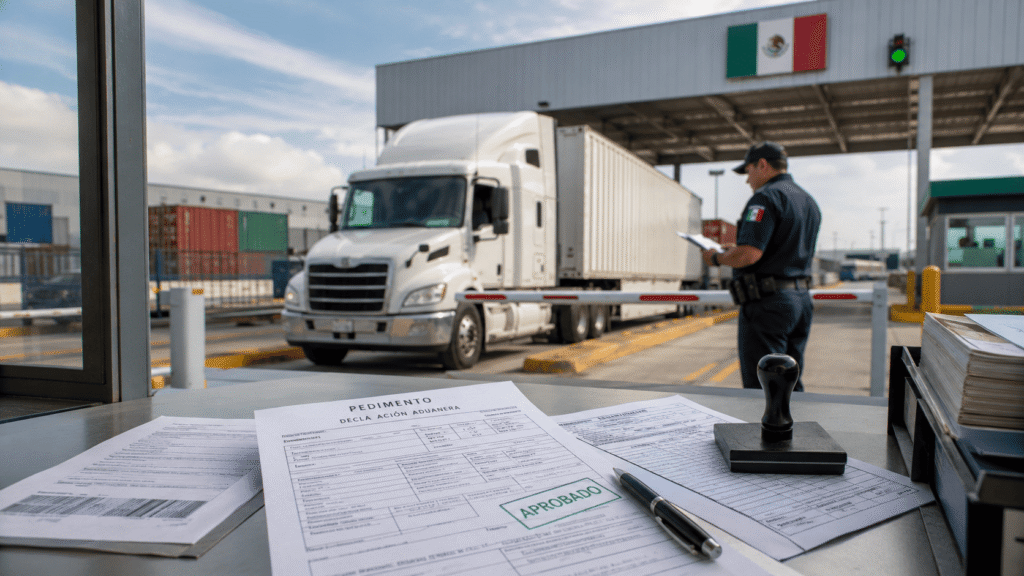
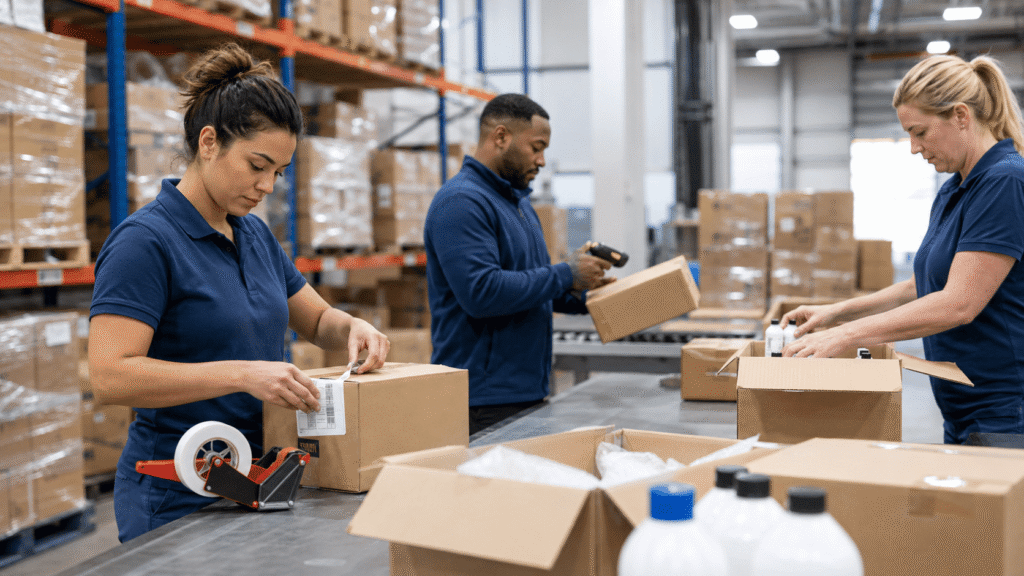
Think of a U.S. brand that outsources part of its fulfillment to Mexico. The company sends pallets of different SKUs to its Mexican 3PL partner, where the items are assembled into custom product kits and shipped back to the U.S. as finished, ready-to-sell units.
What Is Reshoring?
Reshoring is a relocation model that brings manufacturing, logistics, or service activities back to a company’s home country. Companies use it to strengthen supply chain resilience, shorten lead times, improve operational control, and reduce dependence on distant operating locations.
Reshoring Example
Recent reshoring examples include American companies that have moved production from Asia-based factories back to the United States, partly to reduce tariff exposure and uncertainty surrounding Chinese imports, as well as broader supply chain disruption risks.
What Is Offshoring?
Offshoring is the relocation of manufacturing, business processes, or service activities to a distant country, often on another continent. Companies offshore operations to reduce labor and production costs, access specialized skills and suppliers, and expand capacity.
Offshoring Example
One advantage of cross-continental offshoring is the ability to manipulate time-zone differences.
For example, a U.S. company may offshore software development or customer support to India or the Philippines. When the local team finishes the workday, offshore staff can take over, enabling continuous operations and shorter project timelines.
Benefits Of Nearshoring
Not every company arrives at nearshoring the same way. Some are pulling work back after years offshore; others are simply deciding where to site new operations.
Either way, a next-door country brings a set of advantages that’s hard to match elsewhere:
Real-Time Collaboration
Nearshore regions typically share working hours with the home country. A team in Central America, for example, operates within an hour or two of a U.S. schedule rather than half a day out of phase, as is the case with many offshore locations. So, questions and requests get answered quickly during the workday instead of overnight.
Cost Efficiency
Nearshore operating costs typically run well below home-country levels. Wages and benefits, storage space, industrial rent, and utilities all sit at a lower base, so the savings extend beyond just payroll.
Closer Oversight
Proximity turns a site visit into a short trip rather than a major undertaking, so problems can be caught and resolved while they are still small.
Predictable Trade Terms
In many nearshore regions, the commercial relationship also operates under a regional trade agreement such as the USMCA, giving both sides an established framework for tariff treatment, customs procedures, and product standards.
Enhanced Sustainability
Distance is one of the simplest levers in freight emissions: fewer miles between origin and customer tend to mean less fuel burned per shipment, while ground transport can often still keep pace with tight delivery windows that would otherwise need air freight.
This faster turnaround also allows companies to hold smaller buffers instead of warehousing months of forecast-driven inventory in heated, lit, and cooled space.
Added Capacity Without Added Footprint
Companies that operate at home can assign a nearshore partner labor-intensive work that competes for headcount and floor space at the primary site, or a project that does not fit the standard workflow.
That keeps the main facility on its highest-volume work and adds a second node for peak season, a product launch, or a short-run assembly program, without permanently expanding the company’s own footprint.
The following table summarizes the pros and cons of nearshoring, offshoring, and reshoring (often referred to as onshoring) based on the provided sources.
Nearshoring, Offshoring & Reshoring: Pros & Cons Summary
The table below offers a quick look at the key advantages and drawbacks of each location strategy.
| Location Strategy | Pros (Advantages) |
Cons (Disadvantages) |
| Nearshoring |
|
|
| Offshoring |
|
|
| Reshoring (and Onshoring) |
|
|
Nearshoring vs Offshoring: Which Model Fits You Best?
Nearshoring moves business operations to a nearby country, while offshoring relocates them to a distant, often cross-continental location.
Moving operations from the U.S. to Mexico, for example, can offer lower costs, shorter transit times, and less supply chain risk, whereas offshoring to a distant country such as India may deliver greater savings and access to a larger workforce.
Nearshoring vs Reshoring: Balancing Savings & Control
The difference between nearshoring and reshoring lies in where business activities take place relative to the company’s home country.
Under reshoring, manufacturing, logistics, or service functions previously performed abroad are brought back within domestic borders, offering greater control but usually higher labor costs.
With nearshoring, the same functions move closer to home without coming all the way back – a middle position that keeps much of the oversight advantage without taking on the domestic cost base.
Nearshoring vs Onshoring: Two Models Close To Home
Onshoring keeps business operations within borders, reducing exposure to import/export regulations and international shipping delays. However, domestic operations may face a tighter and more expensive labor market, and less room to flex capacity when demand spikes.
Nearshoring sits between the two, giving companies access to lower-cost talent and capacity in a nearby country under preferential trade terms, while keeping operations within practical reach.
This balance helps explain why an increasing number of U.S. enterprises are choosing to nearshore their manufacturing and logistics operations to Mexico.
Benefits Of Nearshoring In Mexico
Nearshoring has moved from contingency plan to standard practice in U.S. supply chain strategy. According to a recent survey, around 58% of U.S.-based organizations have already invested in nearshoring, either as a standalone strategy or alongside their reshoring efforts.
A large share of that investment has landed in Mexico, and the reasons go beyond proximity alone.
A Familiar Business Culture
Nearshoring to Mexico places operations in a business culture closely aligned with U.S. practice, which shortens the ramp-up on everything from meeting norms to reporting expectations.
A Deep Technical Talent Pipeline
Mexico’s education system feeds a substantial technical workforce. Some 26% of its bachelor’s graduates complete STEM programs, above the 23% OECD average, and nearly 1.5 million higher-education students were enrolled in engineering, manufacturing, ICT, mathematics, statistics, and natural sciences during the past academic year.
Preferential Trade Access
Alongside the USMCA, Mexico is party to one of the world’s largest networks of free trade agreements. That gives operations based there preferential access to a wide range of export markets, not only the U.S.
Build A Nearshore Supply Chain With A Tijuana 3PL
Nearshoring only pays off when execution matches strategy.
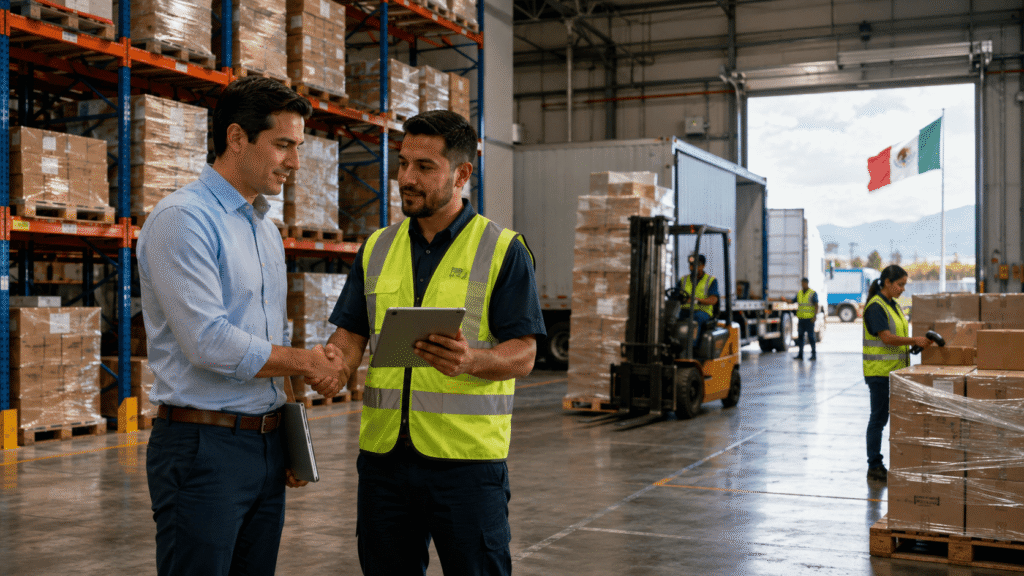
As a Tijuana-based 3PL, Loginam provides the shelter and back-office infrastructure U.S. companies need, pairing IMMEX-registered warehousing with high-volume fulfillment to turn inventory into orders shipped north on schedule, without launching their own Mexican entity.
Make proximity an operating advantage, not a line on a map. Contact us today!