As companies rethink their supply chain operating models, warehouse outsourcing offers a flexible alternative to replace high fixed costs with scalable partnerships built around performance, speed, and resilience.
The Short Stack (TL;DR)
- Warehouse outsourcing (definition): a service model where a 3PL manages a shipper’s storage, fulfillment, and distribution.
- It helps reduce fixed warehouse costs through a flexible, volume-based cost structure.
- The main trade-off is less direct control over day-to-day warehouse performance.
- Outsourcing warehousing in Mexico is an attractive option for U.S. businesses due to proximity, lower labor costs, time-zone alignment, and skilled talent.
What Is Warehouse Outsourcing?
Warehouse outsourcing is a logistics model where shippers – such as retailers, manufacturers, distributors, and eCommerce brands – hire a specialized third-party logistics provider (3PL) to manage some or all aspects of storage and distribution.
Outsourcing Is Not One-Size-Fits-All
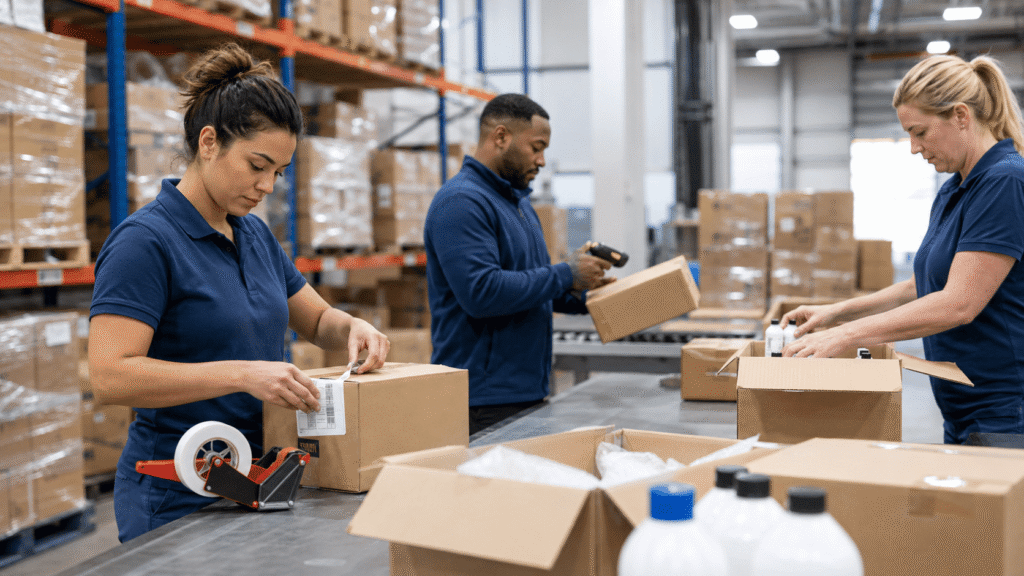
Warehouse outsourcing can range from simple inventory storage to comprehensive fulfillment operations, including picking, packing, and shipping, as well as value-added services like kitting, labeling, quality inspections, and reverse logistics. For longer-term, more integrated arrangements, warehouse outsourcing can form part of a broader contract logistics model.
Outsourced Warehousing: Current Market Dynamics
Today, outsourced warehousing is moving from option to default.
Last year alone (2025), 3PLs accounted for roughly 35% of all industrial leasing activity in the United States. Logistics providers even dominated the top 100 U.S. industrial leases in the first half of the year – totaling nearly 29 million square feet.
Much of this momentum comes down to cost. Consider, for example, that over the past three years, shippers have reported saving 18% to 25% in capital expenditures by choosing external fulfillment over building their own infrastructure.
Benefits Of Outsourced Warehousing
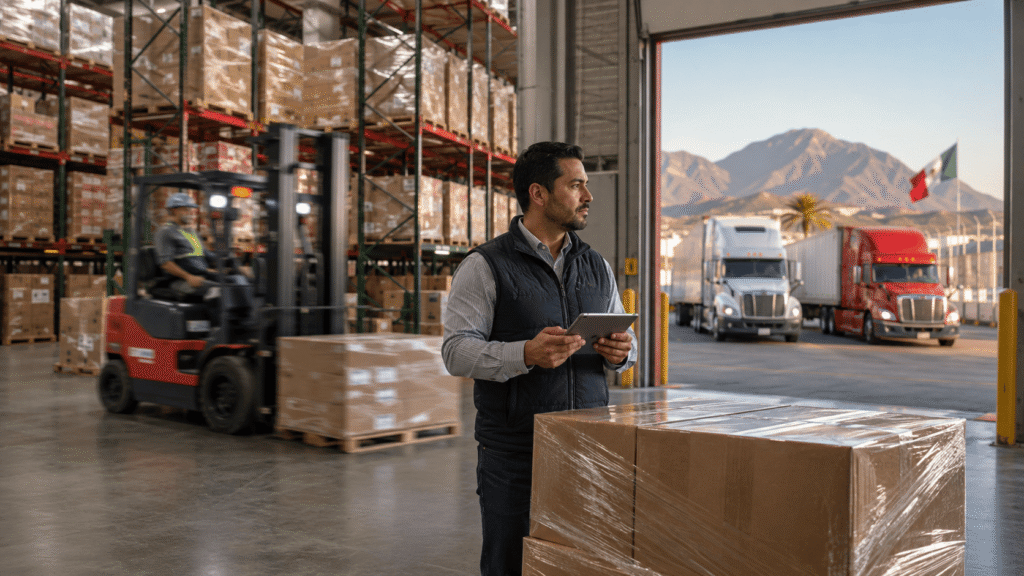
For many companies, outsourced warehousing and fulfillment offers a flexible way to manage inbound logistics, storage, orders, and distribution – as well as reverse logistics – without building everything internally.
Lean Cost Structure
Outsourcing warehousing and fulfillment turns high fixed costs, like long-term real estate leases and permanent staff salaries, into variable expenses tied to your actual volume.
It’s an asset-light model that gives you room to scale capacity up or down based on demand, whether you are dealing with seasonal peaks, promotional surges, or sudden growth. Naturally, this leaves more capital free for production, inventory, and expansion.
Built-In Visibility
Warehouse outsourcing comes with your third-party partner’s technology stack behind it, including sophisticated systems to manage inventory, coordinate shipments, and measure warehouse performance.
The operational payoff is visibility. You can see inventory and order status in real time and catch issues as they happen. With enough data behind it, that visibility becomes foresight, helping you anticipate surges, stockouts, bottlenecks, and capacity pressure before they hit.
Operational Expertise
Outsourcing also brings trained personnel and refined workflows into your supply chain, shaped by years of hands-on experience. From the customer perspective, that expertise shows up in order precision, efficient fulfillment, and smooth reverse logistics.
It also supports the less visible side of warehousing, from safety procedures and labor requirements to product-specific handling rules. The result is fewer avoidable mistakes and safety incidents, and less exposure to operational risk.
Challenges Of Outsourcing Warehouse Operations
Outsourcing warehouse operations isn’t a one-time fix but a continuous journey with challenging moving parts at every stage.
Reduced Direct Control
Outsourcing your warehousing means handing day-to-day operations to people outside your business, so you naturally give up some oversight of both performance and culture.
Unless you build in strong communication, clear escalation paths, and shared performance targets from the start, that operational distance can eventually show up as inventory discrepancies, shipping delays, or recurring issues you cannot correct on the spot.
Risks To Brand Reputation
When you outsource fulfillment, you also outsource the final touchpoint with your customer, so any error there lands directly on your brand.
Customers don’t separate their experience from your name, which means mishandled goods, late deliveries, or poor packaging become yours to own, not your partner’s.
Technical Integration & IT Hurdles
Outsourcing only works once your systems connect cleanly, so a smooth go-live depends on integrating your ERP or order management system with the 3PL’s Warehouse Management System (WMS).
Problems usually surface when companies test separate steps but never the full order-to-delivery flow, or when extra requests added during setup push out timelines and inflate costs.
Bad data is just as costly; inaccurate SKUs, weights, dimensions, or undocumented customer rules can trigger pricing errors, manual exceptions, and service issues after launch.
Nearshoring: The Power Of Outsourcing In Mexico
For U.S. businesses, Mexico now sits at the heart of the nearshoring conversation.
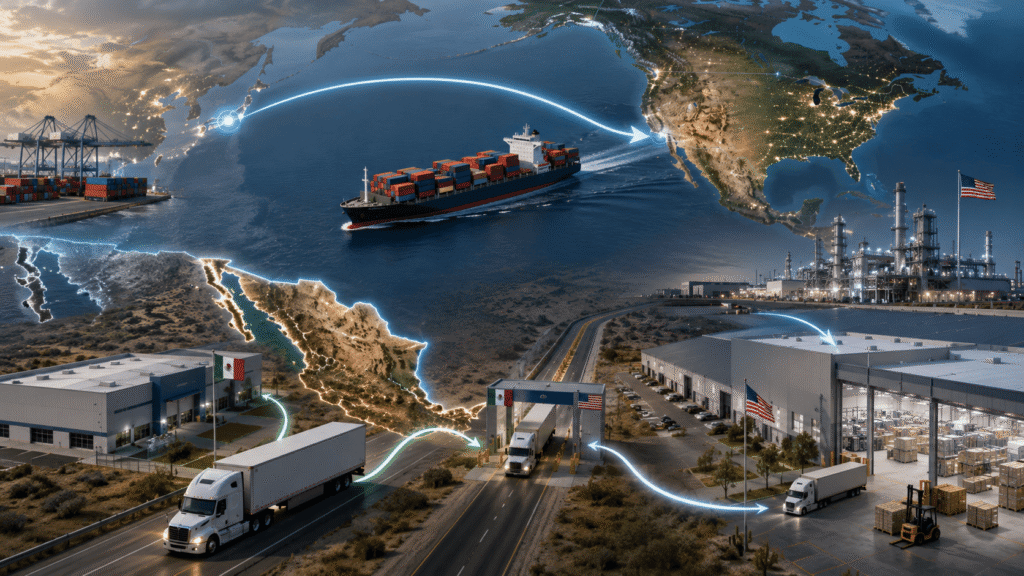
Last year alone, goods trade between the two countries hit roughly $873 billion, making Mexico the top U.S. trading partner. At the same time, foreign direct investment climbed to a record $40.9 billion, for the fifth year of growth in a row.
And there are many good reasons why:
Geographic Proximity
Sharing a border allows for significantly faster time-to-market than overseas alternatives. Goods can often move by land, avoiding the delays and disruptions of long ocean voyages.
Cost Efficiency
Manufacturing labor remains highly competitive. Even after accounting for mandatory benefits and employer costs, production labor typically runs three to four times lower than comparable U.S. roles.
Time Zone Alignment
Operating in the same or overlapping time zones as the U.S. supports real-time collaboration and easier day-to-day management.
Skilled Workforce
Hubs like Monterrey, Tijuana, and Querétaro offer large young talent pools. In fact, in Mexico, more than 100,000 engineers and technicians graduate from university every year, with many specializing in automotive parts, electronics, medical devices, and aerospace components.
Still, Outsourcing In Mexico Works Best When You Mind The Details
- IP Protection: Mexico has modernized its IP rules under the USMCA, but enforcement can still be a concern. Strong contracts, NDAs, and local legal support are important.
- Labor & Cost Changes: Companies should plan around changing labor rules, wage pressure, and peso volatility.
- Quality Control: Strong quality controls, such as first-article inspections and in-process audits, are essential to keeping standards steady.
Looking For A Nearshore 3PL On The Tijuana–San Diego Border?
Loginam is a Tijuana-based nearshore 3PL that helps U.S. companies move warehousing and fulfillment to the border without taking on fixed facilities or staff.
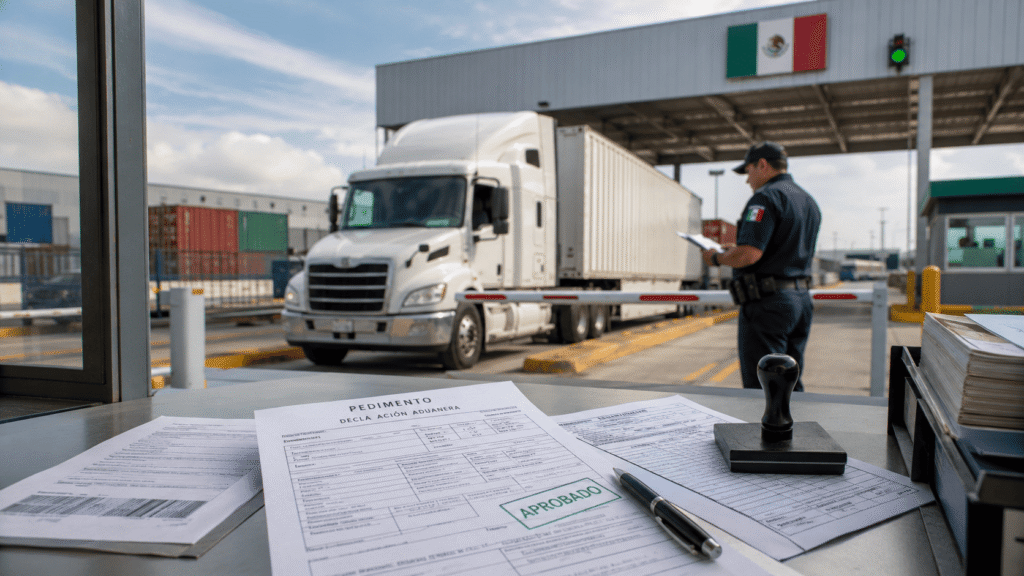
For brands running cross-border or maquila operations, we pair flexible storage and pick-and-pack fulfillment with end-to-end pedimento and USMCA documentation, so inventory clears smoothly and reaches U.S. customers faster.
With 20 years of experience and 285,000+ sq ft of flexible space, Loginam helps you make warehouse outsourcing a strategic move, not just a cost decision. Contact us today!
FAQs
What Are The 4 Types Of Outsourcing?
The four primary geographic types of outsourcing are:
- Onshore: Working with a third-party vendor located within your own country.
- Nearshore: Partnering with a provider in a neighboring or nearby country.
- Offshore: Contracting operations to a distant international country.
- Onsite: Bringing external contractors directly to work inside your facility.
What Are The 3 Types Of Warehouses?
The three primary types of commercial warehouses are:
- Public Warehouses: Shared spaces owned by third parties, rented on a flexible, short-term basis.
- Private Warehouses: Facilities owned or strictly leased by a single business for its exclusive use.
- Bonded Warehouses: Specialized facilities where imported goods are stored securely before customs duties are paid.
What Are The 5 KPIs For A Warehouse?
Some core warehouse KPIs include:
- Inventory Accuracy: The match between tracked inventory and actual stock.
- Order Lead Time: Total time from order placement to shipping.
- Picking Accuracy: Rate of error-free orders picked and packed.
- Receiving Efficiency: Time to log incoming stock.
- Space Utilization: Percent of total storage used.