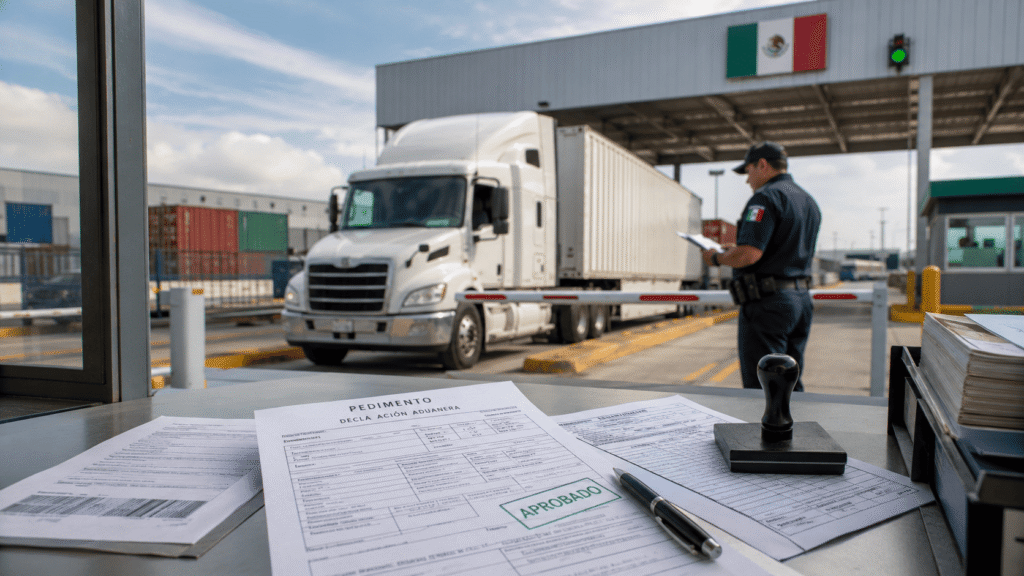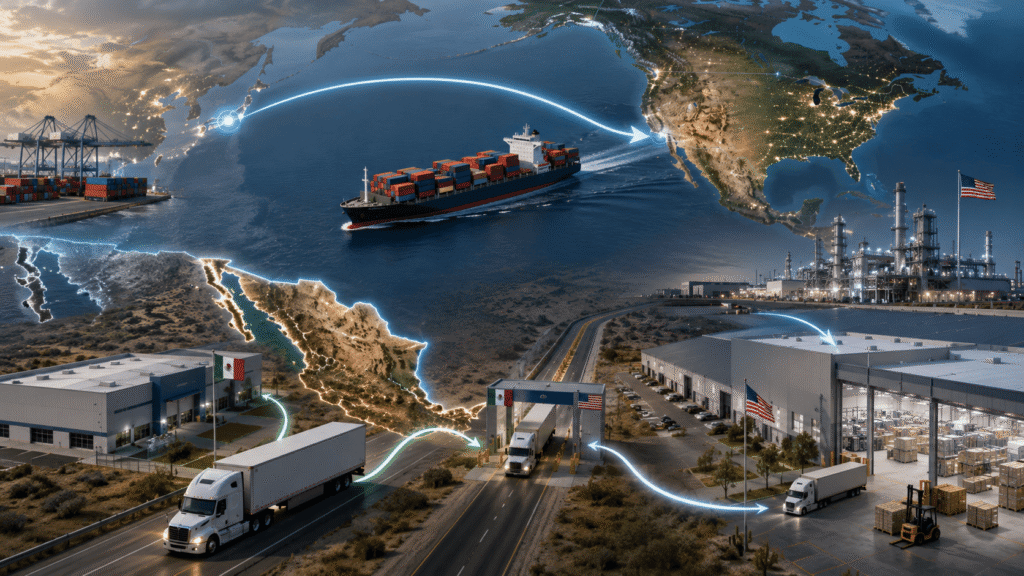
Contract logistics is a core function in modern supply chains. As complexity grows, so does the need for long-term partnerships that are well integrated into a business’s operational nuances and operational requirements.
Demand is growing in response: the global contract logistics market is expected to grow by 4.1% in 2026, rising from €307.455 billion to €320.024 billion.
And while many product-based businesses already partner with a 3PL for standalone services such as warehousing, transportation, or fulfillment, contract logistics providers take that relationship further.
TL;DR
- Contract logistics is the long-term outsourcing of a company’s supply chain operations to a specialized provider under a formal agreement, typically running three to five years.
- Warehousing, order fulfillment, transportation, and inventory control are the core services usually bundled under a single provider, often alongside value-added work such as kitting or labeling.
- Unlike a standard 3PL, which delivers individual services on a transactional basis, contract logistics takes on a coordinated operating model of facilities, labor, systems, and performance targets, closer to an outsourced logistics division.
- Businesses gain predictable costs, scalable capacity, integrated technology, and lower risk, plus the freedom to focus on core operations instead of running logistics themselves.
What Is Contract Logistics?
Contract logistics is the strategic, long-term outsourcing of certain supply chain operations to a specialized provider. In practice, this may include warehouse management, freight transportation, value-added kitting or labeling, with each service managed under a detailed agreement.
Essentially, the provider acts as a strategic extension of your company, managing the people, processes, systems, and infrastructure needed to run each operation efficiently and meet contractual KPIs.
This deeper operational commitment is reflected in the length of these partnerships. Data indicate that the majority of contract logistics agreements fall within the 3-to-5-year range, though 1-to-3-year contracts are also on the rise.
What Services Does Contract Logistics Include?
A contract logistics agreement usually bundles several core services under one provider, so a single partner runs functions a business would otherwise coordinate separately. The exact mix is set in the contract.
Warehousing & Specialized Storage Facilities
Warehousing covers storing goods in facilities designed for the product type, whether that means ambient racking, temperature-controlled space, or high-bay bulk storage. The contract logistics provider manages the space, equipment, and staff, and sizes capacity to your inventory profile rather than a fixed lease you have to fill.
Depending on the operation, this can be combined with inventory management services such as stock control, cycle counting, and replenishment.
Order Fulfillment: Picking, Packing & Labeling
Order fulfillment is the hands-on work of turning an order into a shipment: picking items from stock, packing them to protect the product in transit, and labeling each parcel for the carrier. Accuracy here is what customers actually see, so providers track pick and pack error rates closely.
B2B fulfillment may also include documentation, outbound preparation, and distribution to retailers or distributors.
Transportation & Freight Route Coordination
Transportation moves freight between suppliers, facilities, and customers, and plans the routes and carriers that get it there. A contract logistics provider books capacity, consolidates shipments where it saves cost, and coordinates inbound and outbound loads so trucks are not running half empty.
The scope can also extend to carrier management, scheduling, shipment tracking, and freight forwarding.
Inventory Control, Stock Tracking & Returns
Inventory control keeps stock levels accurate across every location, using system records that reconcile against what is physically on the shelf. It also covers reverse logistics services: receiving items back, inspecting them, and deciding whether each unit is restocked, repaired, reworked, refurbished, or recycled.
Value-Added & Production Support Services
Beyond storage and transportation, contract logistics can include value-added services such as kitting, assembly, packaging, repacking, labeling, quality checks, retail display preparation, postponement, and light manufacturing or production-support activities.
Technology, Visibility & Systems Integration
Technology connects these logistics functions into a coordinated operation. Contract logistics providers may integrate warehouse, transportation, order management, and ERP systems to provide inventory and shipment visibility, traceability, operational reporting, and performance monitoring against agreed KPIs.
How Contract Logistics Works
Contract logistics is built on close integration with your operations, supported by a provider that understands your workflows, service requirements, and day-to-day processes.
It All Starts With A Structured Agreement
Before operations begin, the company and provider define what will be outsourced, what outcomes are expected, and how performance will be measured.
The contract logistics agreement includes the use of dedicated infrastructure and customized workflows to support your supply chain needs.
It also references SLAs (Service Level Agreements) that establish clear performance expectations and hold the provider accountable for meeting your strategic goals.
The Provider Designs The Operating Model
Once a partnership is established, the 3PL contract logistics provider acts as an extension of your company, designing and planning a logistics model tailored to your business requirements.
The Provider Runs The Day-To-Day Logistics Operation For The Agreed Scope
After the design stage, the provider manages the daily logistics tasks covered by the agreement.
This may include receiving goods, storing inventory, tracking stock levels, processing orders, picking, packing, labeling, shipping, coordinating carriers, and handling returns.
Performance Is Managed Through KPIs And Continuous Improvement
Contract logistics is based on sustained collaboration and ongoing optimization. Success is monitored through Key Performance Indicators (KPIs) that measure critical metrics like inventory and order accuracy, fulfillment speed, on-time shipping, and cost efficiency.
Unlike a transactional relationship, the provider is responsible for driving long-term value, using data-driven insights to continually refine processes and adapt to your changing business needs.
Contract Logistics vs 3PL: What’s The Difference?
The core difference between contract logistics and a 3PL is the depth of responsibility. A company may use a third-party logistics provider for individual services, but in contract logistics, the provider usually takes responsibility for a coordinated operating model that connects facilities, labor, systems, processes, reporting, and performance targets.
So, if basic 3PL support is a vendor relationship, contract logistics is closer to an outsourced logistics division.
In practice, however, the line between 3PL and contract logistics is not always perfectly clean.
Many businesses describe their 3PL relationship as a strategic partnership, but research data suggests these relationships are often less strategic than they sound.
This is why many shippers and 3PLs agree that longer-term, more collaborative agreements are needed.
Benefits Of Contract Logistics
As supply chain complexity grows, contract logistics becomes more important for maintaining control, efficiency, and flexibility.
1. Cost Predictability & Efficiency
Long-term agreements establish clearer pricing structures over time, helping companies plan logistics spend with more confidence instead of relying on ad-hoc warehouse, labor, or transportation arrangements.
While recurring management fees are involved, these partnerships often deliver better unit economics at high or stable volumes due to optimized processes and dedicated resources.
2. Operational Scalability & Flexibility
Contract logistics partners can adjust storage space, labor, and transport capacity to absorb seasonal peaks, such as holiday spikes, product launches, or market fluctuations, without the client needing to source new vendors, lease extra space, or redesign the logistics setup each time demand shifts.
3. Technology Integration & Expertise
A contract logistics provider configures the technology around your operating model, efficiently connecting systems such as WMS, TMS, ERP, EDI, ecommerce platforms, marketplaces, and reporting tools.
In this way, inventory, orders, shipments, and exceptions can be managed through one connected workflow for a more reliable and resilient supply chain.
4. Risk Reduction & Quality Control
Because contract logistics often involves long-term personnel assignments, your provider builds working knowledge of your operating requirements, resulting in fewer errors and more consistent service quality than more transactional arrangements.
5. Focus On Your Core Business Operations
Handing logistics execution to a dedicated provider frees internal teams from managing warehouses, labor, and carriers, so they can spend that time on product, sales, and growth. Because the provider already acts as a strategic extension of your company, day-to-day operational load shifts off your staff without you losing visibility or control. For lean teams, that reclaimed focus is often as valuable as the direct cost savings.
Contract Logistics In Figures
Contract logistics is expanding across the Americas, although the size and projected growth of the market vary considerably by country and region.
United States Contract Logistics Market
The U.S. contract logistics market was valued at $62.37 billion in 2025 and is estimated to reach $64.74 billion in 2026, with further growth to $78.01 billion forecast by 2031.
Latin America Contract Logistics Market
The Latin America contract logistics market was valued at $21.5 billion in 2025 while 2026 market forecasts project it will reach $22.86 billion in 2026 and $24.31 billion in 2027.
Mexico Contract Logistics Market
Mexico’s contract logistics market is estimated at $9.12 billion in 2025, up from $8.76 billion in 2024, and is projected to reach $12.99 billion by 2035.
Canada Contract Logistics Market
The Canada contract logistics market was valued at $12.15 billion in 2025 and is projected to reach $17.31 billion by 2035, representing a 3.64% CAGR from 2025 to 2035.
Contract Logistics Examples
To get an idea of how contract logistics helps businesses scale complex supply chain operations, here are two practical examples:
Scaling U.S. Distribution To Support Growth
A fast-growing beverage and nutrition company needed more U.S. distribution capacity to support high-velocity consumer brands, retail channels, and manufacturing-linked operations.
To support this growth, their contract logistics provider expanded the partnership with a new 375,000 ft² facility for warehousing, distribution, and co-packing.
The provider also scaled up operations near a co-manufacturing site, helping the company move products faster through its U.S. network and support continued growth.
Managing SKU Complexity & Seasonal Demand
A professional tools and equipment manufacturer needed logistics support for a large product portfolio, seasonal demand swings, and high order volumes. The operation involved more than 45,000 SKUs and around 90,000 orders in a single year.
The company worked with a contract logistics provider that was already supporting its operation with integrated 3PL services, including storage, handling, labeling, and kitting.
So, to meet this rising demand, the logistics partner expanded the warehouse footprint from 14,000 m² to 32,000 m², allowing the operation to scale efficiently as product complexity and demand increased.
Contract Logistics FAQs
How Long Do Contract Logistics Contracts Last?
Contract logistics agreements are built for the long term, which is part of what separates them from one-off logistics services. Most fall in the three- to five-year range, though shorter one- to three-year agreements are becoming more common as businesses look for flexibility. The longer horizon reflects the setup involved: dedicated infrastructure, integrated systems, and staff who learn the account, all of which take time to pay off and are hard to justify for a short engagement.
How Do You Get Started With Contract Logistics?
Getting started usually begins with defining scope: which functions you want to outsource, the volumes involved, and the outcomes and service levels you expect. From there, you brief potential providers, compare how each would design the operating model, and agree on the SLAs and reporting that will hold the partnership accountable. Because the provider builds dedicated infrastructure and integrates with your systems, expect an onboarding and transition period before the operation runs at full speed rather than an instant switch.
What Does A Logistics Contractor Do?
A logistics contractor manages agreed supply chain activities on behalf of a business. This can include warehousing, inventory control, transportation, order fulfillment, distribution, returns, and related logistics operations under a defined contract.
What Benefits Do Businesses Gain From Using A Single Provider For Both Contract Warehousing And Freight Forwarding?
Using one provider streamlines logistics in various ways:
- Simpler coordination
- Better inventory visibility
- Faster goods movement
- Lower administrative burden
- Potential cost efficiencies
- Clearer accountability
- Easier scalability
- More consistent service levels
How Can I Choose A Contract Logistics Provider For A Long-Term Dedicated Distribution Operation?
Choose a contract logistics provider with proven experience in dedicated distribution, scalable capacity, strong technology integration, transparent KPIs, reliable service levels, and the ability to customize operations. Also assess financial stability, communication, compliance, and long-term cultural fit.
Looking For Contract Logistics Support Near California?
Located just across the border from California, Loginam is a Tijuana-based nearshore 3PL built for manufacturers and distributors moving goods across the U.S.-Mexico border.
Our model combines dedicated warehousing, cross-border transportation, value-added services, and ongoing logistics coordination, enabling scalable operations without adding unnecessary complexity.
Ready to get started? Contact us today!