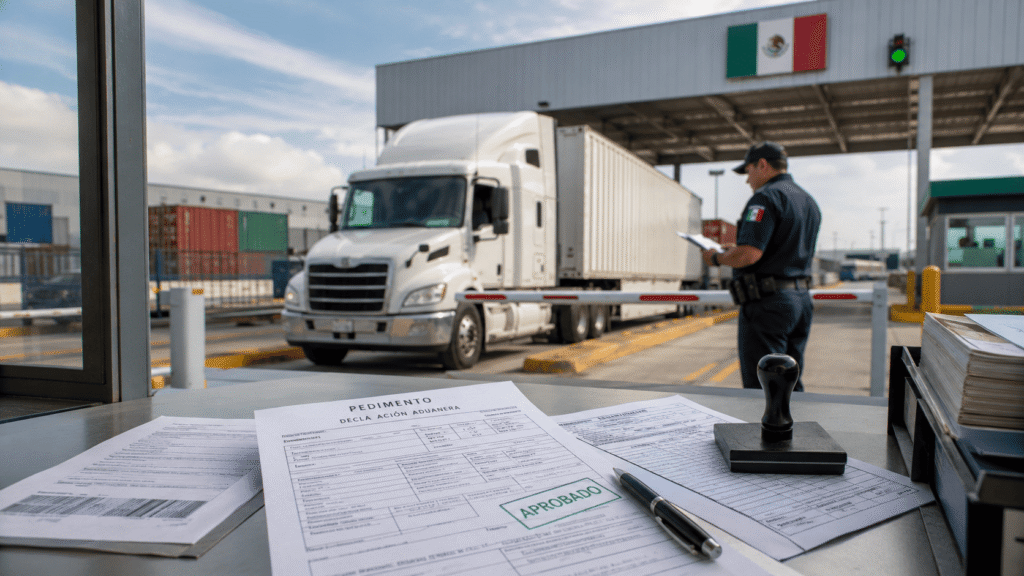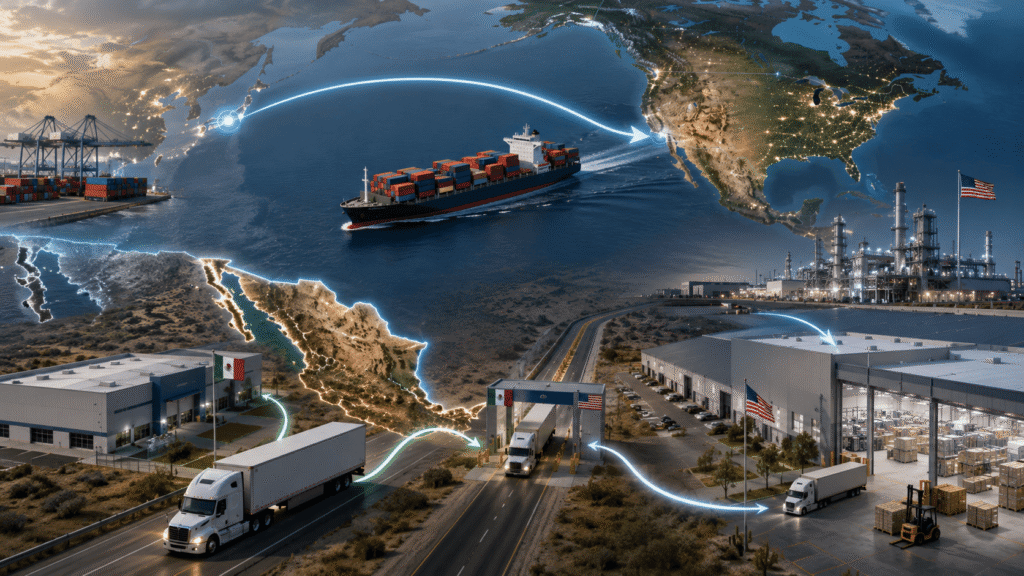
Nearshoring has traditionally been associated with manufacturing, but as supply chains prioritize speed, flexibility, and regional resilience, it is also becoming a practical way to optimize post-production logistics.
For U.S. shippers, Mexico can help expand regional capacity, lower operating costs, and reduce the risks that come with distant offshore models.
To see how this model works, it helps to start with a clear definition of nearshoring.
What Is Nearshoring?
Nearshoring is the business practice of moving or outsourcing operations, manufacturing, logistics, or other services to a nearby country. It helps companies balance the cost savings of global outsourcing with the logistical and operational benefits of geographic proximity.
For U.S. companies, this often means shifting parts of their supply chain, usually manufacturing, from distant hubs in Asia or other continents to neighboring countries like Mexico. It can also mean outsourcing key logistics operations, such as warehousing and fulfillment, from U.S. locations to more cost-effective Mexican facilities near the border.
Nearshore vs Offshore
Choosing between nearshore and offshore outsourcing instead of onshore operations means weighing cost, control, speed, and risk.
Offshoring: Chasing The Bottom Line
Offshoring moves work to distant, lower-cost countries, often across oceans. Historically, it has been a go-to strategy for mass manufacturing.
The Pro: Access to the lowest possible labor rates.
The Con: Distance complicates real-time collaboration, extends transit times, and leaves the company vulnerable to global supply chain disruptions.
Onshoring: The Control-First Option
Onshoring, i.e., keeping supply chain operations within your home country, offers the highest level of control without the international hurdles.
The Pro: Maximum oversight and faster deliveries.
The Con: It often comes with higher labor costs and may narrow your options for specialized partners or lower-cost operating models.
Nearshoring: The Strategic Middle Ground
Nearshoring relocates operations to a nearby country. For example, a U.S. company may move production or bulk order fulfillment to Mexico to balance cost savings with a closer operational footprint.
The Pro: Nearshore logistics are often faster and more cost-effective than offshore alternatives. Teams also benefit from similar time zones and cultural alignment.
The Con: While cheaper than onshoring, nearshoring usually does not offer the ultra-low labor costs associated with distant offshore hubs.
Overall, nearshore outsourcing is a practical alternative to both fully domestic operations and distant offshore models.
Benefits Of Nearshoring
Today, nearshore outsourcing helps companies bring key operations closer to the end market, making distribution easier to coordinate and less exposed to long-distance disruptions.
At the same time, it can give businesses more room to scale beyond a purely domestic setup without moving key functions too far from their customers.
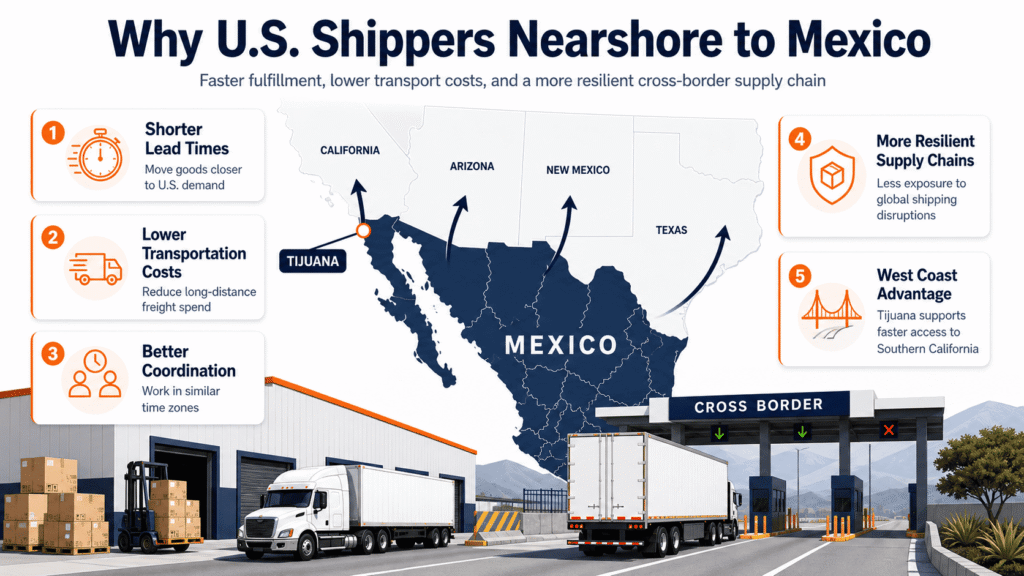
Shorter Lead Times
When logistics activities are located closer to the end market, companies respond faster to demand and market changes.
Lower Transportation Costs
Shorter travel distances mean lower freight costs, reduced shipping fees, and fewer surprise costs associated with long-distance offshoring.
Lower Production Costs
Companies can gain access to lower-cost manufacturing or assembly work in nearby markets, helping reduce production expenses, while keeping logistical activity closer to home.
More Resilient Supply Chains
Nearshoring reduces exposure to long international routes, port congestion, geopolitical disruption, and global shipping shocks for more flexible and predictable supply chains.
Better Communication & Coordination
Similar time zones allow teams to collaborate in real time, solve problems faster, and avoid long-distance delays.
Potential Sustainability Gains
Shorter shipping routes can reduce fuel use and emissions, supporting ESG (Environmental, Social, and Governance) goals.
Nearshoring In Mexico: Empowering The U.S. Shipper
Through frameworks such as the USMCA, nearshoring in Mexico allows U.S. shippers to move goods more efficiently across the border while benefiting from Mexico’s established industrial clusters in sectors like automotive, aerospace, and electronics.
These advantages extend beyond manufacturing to 3PL operations such as warehousing, fulfillment, cross-docking, and returns.
Mexico nearshoring is not only about where products are made. It is also about where goods are stored, prepared, fulfilled, and moved into the U.S. market.
Why U.S. Companies Are Nearshoring Supply Chain Operations To Mexico
Mexico gives U.S. companies a practical way to shift parts of their supply chain beyond the U.S. without moving too far. That shift can change how companies manage cost, speed, capacity, and day-to-day coordination.
1. Lower Operating Costs Than U.S.-Based Logistics
Moving core 3PL operations in Mexico can reduce warehousing, labor, and fulfillment costs compared to keeping the same functions entirely in the U.S.
For hands-on workflows, such as order fulfillment, light assembly, kitting, and repackaging, Mexico offers a more cost-effective base than many U.S. locations while remaining geographically close.
2. Faster Fulfillment Than Distant Offshore Models
Unlike offshore models that typically rely on long ocean freight routes, goods coming from warehouses in Mexico can cross the border in under 48 hours on certain lanes, instead of taking weeks to cross the ocean.
This reduces lead times and accelerates replenishment.
3. Optimized Inventory Positioning
Nearshoring allows businesses to place inventory closer to U.S. demand without keeping every warehouse or fulfillment node inside the U.S.
By using Mexico as part of a cross-border logistics network, companies can position inventory closer to U.S. demand, reduce reliance on large domestic inventory buffers, and support B2B or eCommerce fulfillment with more flexibility.
4. Established Cross-Border Infrastructure
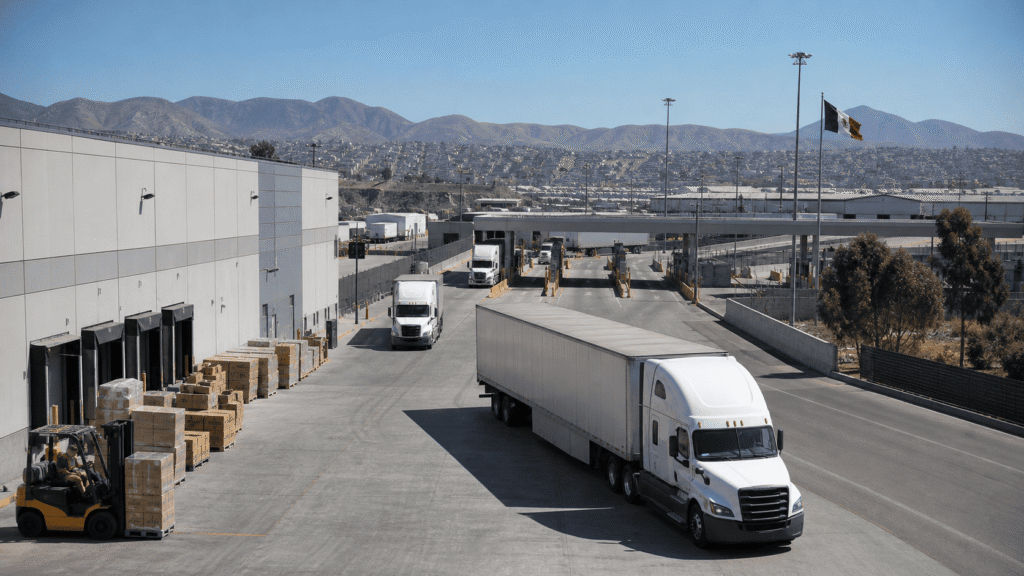
Mexico is deeply integrated with the U.S. through an extensive network of road and rail crossings. With 43 road and 8 rail crossings along a nearly 2,000-mile border, shippers have multiple entry points to combine Mexico-based staging with U.S. distribution.
These established freight corridors make nearshoring more practical than simply placing inventory “somewhere cheaper.” They provide the physical infrastructure needed to move goods across the border consistently and connect nearby logistics activity with U.S. customers.
5. Increased Network Flexibility
U.S. companies can use Mexico for seasonal staging or value-added services such as packaging, assembly, or labeling, then move inventory into the U.S. based on current sales needs.
6. Specialized Export Programs, Including IMMEX
Mexico’s IMMEX program, formally the Manufacturing, Maquila and Export Services Industry Program, supports qualifying export-oriented workflows. It allows approved entities to temporarily import certain goods and materials into Mexico for processing, servicing, or other eligible activities, as long as those goods are later exported.
This structure can help U.S. businesses reduce upfront tax and duty exposure on goods that are temporarily staged, processed, packaged, or assembled in Mexico before returning to the U.S. market.
Tijuana: The Gateway For West Coast Distribution
As a primary logistics hub near the Pacific Coast, Tijuana offers a strategic advantage for organizations targeting the Western United States. Its unique binational “mega-region” connection with San Diego makes it a critical point for high-velocity cross-border trade.
Last-Mile Proximity
Tijuana’s location directly on the California border enables fast access to major Southern California logistics hubs, including Los Angeles and the Inland Empire.
This proximity is not just geographic; it is operational. For example, the Otay Mesa Port of Entry, the largest commercial crossing on the California-Mexico border just north of Tijuana, handles more than 1.4 million truck crossings per year.
B2B Fulfillment Advantage
Tijuana gives U.S. businesses a robust nearshore base for storing, preparing, and shipping bulk orders, replenishment inventory, and wholesale shipments before they enter the U.S. market.
It’s worth noting that in Q3 last year, Tijuana’s industrial inventory reached approximately 102 million square feet.
Cross-Border Synergy
Tijuana remains at the center of a binational infrastructure strategy focused on faster northbound freight movement.
The under-construction Otay Mesa East Port of Entry – targeted for a phased opening in late 2027 – will introduce a modern commercial crossing supported by a four-lane toll road (State Route 11) and advanced border technologies.
Partnering with a 3PL company in Tijuana, such as Lognam, allows U.S. businesses to leverage the region’s proximity to the border for faster fulfillment, leaner inventory movement, and a more responsive West Coast distribution strategy.
Loginam helps U.S. businesses use Mexico’s nearshore advantage for VAS warehousing, fulfillment, cross-border movement, and more responsive distribution.
Explore how Loginam can support your nearshore logistics strategy. Contact us today!