TL;DR
- Temperature-controlled warehousing keeps sensitive products within exact temperature ranges. It helps protect quality, shelf life, and compliance.
- Ambient, temperature-controlled, and climate-controlled warehouses are not the same. Climate-controlled spaces also manage humidity and air quality.
- Strong insulation, HVAC, airflow control, automation, IoT monitoring, and backup power all help keep storage conditions stable.
- For food, pharmaceuticals, cosmetics, chemicals, electronics, and medical supplies, the right setup helps reduce spoilage and protect product integrity.
Have you ever wondered how fresh food or delicate cosmetics reach your local store in perfect condition?
Well, it all comes down to cold chain logistics and temperature-controlled warehousing and fulfillment.
From temperature control storage for pharmaceuticals to climate controlled warehouse space for electronics and cosmetics, the right environment isn’t optional; it’s what keeps product integrity intact and your supply chain operations compliant.
What Is A Temperature Controlled Warehouse?
A temperature controlled warehouse is a specialized storage facility that keeps inventory within a very specific thermal range. It’s designed to ensure that temperature-sensitive products like perishable food or pharmaceuticals maintain their integrity and shelf life.
Temperature-controlled warehousing is growing fast. In fact, it’s estimated to reach $204.31B in 2026, as demand for refrigerated and frozen capacity continues to rise.
Temperature Controlled Warehousing vs Ambient vs Climate Controlled Warehouses
Choosing the right temperature range and controls is all about matching the environment to the product’s needs.
Ambient Warehouse
An ambient warehouse has standard conditions, meaning natural, unmanaged temperature. It’s used for non-temperature-sensitive stock, like dry goods, textiles, and paper products.
Ambient storage is the default setting for most general warehousing; it costs less, consumes less energy, and works for the majority of packaged goods.
However, “ambient” doesn’t mean unmonitored. Quality ambient warehouses still regulate conditions to avoid extreme swings, and in regions with high seasonal variability, basic HVAC is used to keep temperatures within the 59–77°F (15–25°C) range.
Controlled Ambient Storage
Controlled ambient storage is a related but distinct concept: it refers to ambient environments where temperature stays within a tighter band – typically 59–77°F – with active monitoring to prevent spikes. This is commonly required in pharmaceutical distribution for products labeled “store at controlled room temperature.”
Dry Storage
Ambient storage and dry storage are often used interchangeably, but there is a nuance: dry storage typically adds humidity control to the equation, keeping moisture-sensitive goods like electronics, packaging materials, or paper products within a safe range, usually 30–50% relative humidity.
Ambient storage focuses primarily on temperature.
Temp-Controlled Warehouse
In contrast to ambient conditions, temperature-controlled warehousing uses AC, refrigeration, and insulation to maintain a regulated temperature at the exact heat or cold level required for items stored, such as the 32°F to 50°F (0°C to 10°C) range required for dairy, meat, and some drug products.
Climate Control Warehouse
Climate control warehouses regulate storage temperature but also offer extra environmental controls for humidity, air quality, and sometimes even air pressure. Using humidifiers, dehumidifiers, and other tech, they prevent mold, warping, or oxidation for inventory like textiles or electronics.
Common Temperature Zones In A Warehouse
Temperature-controlled facilities typically operate across four main temperature ranges:
- Ambient: 59°F to 86°F (15°C to 30°C)
- Cool: 50°F to 59°F (10°C to 15°C)
- Refrigerated: 32°F to 50°F (0°C to 10°C)
- Frozen: -22°F to 32°F (-30°C to 0°C)
What Products Need Temperature-Controlled Storage?
The main product types that require temp-controlled warehousing include:
- Food and beverage items such as meat, dairy, frozen foods, and fresh produce.
- Pharmaceuticals – vaccines, insulin, and various biologics, clinical trial materials, etc.
- Chemicals like adhesives, coatings, resins, or solvents.
- Cosmetics: creams and lotions that may destabilize with heat/cold cycling; also, lipsticks/lip balms and other wax/oil-based makeup that can soften or even melt.
- Electronics such as lithium-ion batteries and LCD/OLED displays can degrade in performance when exposed to heat.
- Medical supplies: diagnostic kits or certain lab reagents.
- Wine and spirits require stable ambient temperature (typically 55–65°F) with humidity control to prevent cork degradation and flavor oxidation.
- Fine art and antiques: High-value collectibles, paintings, and artifacts are vulnerable to humidity and temperature fluctuations that can cause cracking, warping, mold, and corrosion.
- Printed materials and packaging: Labels, cartons, and marketing collateral can warp or yellow under high heat, a core detail that’s often overlooked in 3PL planning.
Key Benefits Of Temperature Controlled Warehousing
Temperature-controlled warehousing helps protect sensitive products from heat, cold, humidity, and temperature swings.
For brands handling sensitive or regulated goods, the right warehouse environment can protect quality, reduce waste, and keep the supply chain moving with fewer disruptions.
Better Product Quality & Integrity
Temperature control storage helps slow spoilage, chemical breakdown, microbial growth, and quality loss.
For food and beverage products, that can help preserve freshness for longer. For pharmaceuticals, supplements, cosmetics, and other sensitive goods, it can help keep products stable, safe, and usable throughout storage and distribution.
Lower Waste & Inventory Losses
Temperature excursions can turn sellable inventory into unsellable stock quickly. A monitored temp controlled warehouse helps reduce the risk of rejected shipments and emergency write-offs.
With the right systems in place, teams can catch problems early and take corrective action before a small temperature issue becomes a larger inventory loss.
Stronger Compliance & Documentation
Many temperature-sensitive products are subject to strict storage, safety, and handling requirements. Temperature controlled warehousing services can support compliance by maintaining defined storage conditions, monitoring temperature zones, and keeping records that show products were stored correctly.
This is especially important for regulated goods where documentation matters as much as the storage environment itself.
Improved Visibility Across Temperature Zones
Modern temperature-controlled logistics rely on sensors, alerts, and monitoring systems to track conditions across ambient, refrigerated, frozen, and climate controlled warehouse space.
This gives operators better visibility into what is happening inside the facility and helps them respond quickly when temperatures move outside the required range.
More Flexible Storage For Different Product Types
Not every sensitive product needs the same environment. Some products require refrigerated or frozen storage, while others need controlled ambient storage or climate controlled warehouses that prevent excessive heat, humidity, or temperature swings.
Multi-zone warehousing gives businesses more flexibility to store different product categories in one coordinated operation.
How Temperature Controlled Warehousing Works
A temperature controlled warehouse is a sophisticated storage facility that combines specialized technology and design to safeguard temperature-sensitive inventory. It offers several integrated layers of protection:
Structural Engineering & Insulation
The first line of defense is the building itself, which has high-performance insulation, often in the form of “sandwich panels”. This structure creates a thermal barrier that traps conditioned air inside while blocking external heat or cold.
Temperature is further regulated during non-storage activities. During loading and unloading, for example, docks are equipped with rapid-close doors, air curtains, and dock seals to prevent air leakage and maintain a stable internal environment when trailers arrive.
Active Environmental Control Systems
Maintaining and controlling a precise temperature range within the warehouse necessitates sophisticated technology.
HVAC
HVAC (Heating, Ventilation, Air Conditioning) and refrigeration rely on high-performance equipment, such as compressors, condensers, and evaporators, that actively remove or add heat and circulate conditioned air to maintain defined storage zones, whether ambient, chilled, or frozen.
VRF
In more advanced facilities, Variable Refrigerant Flow (VRF) uses refrigerant to move heat between zones, rather than relying on large volumes of air or water, improving energy efficiency while keeping temperature control stable.
PLC
The temp-control system is managed by microprocessors and Programmable Logic Controllers (PLCs) that process sensor inputs and trigger mechanical responses, for example, modulating fan speeds or adjusting intake dampers as needed.
HVLS
Air movement is just as important as cooling capacity, so solutions like High Volume Low Speed (HVLS) fans and mixing chambers help distribute air evenly, reduce stratification, and prevent hot spots in high-density racking, keeping conditions consistent around the clock.
Why The Right Tech Matters
Efficient airflow, insulation, and automation not only safeguard item quality but also optimize energy consumption.
Indeed, cold-chain and temperature-controlled facilities are energy-intensive, accounting for over 30% of the total energy consumption of the entire logistics industry and for roughly 50% to 70% of a 3PL’s total operating expenses.
Real-Time Monitoring & IoT Technology
Monitoring is the heartbeat of our temperature controlled fulfillment and warehousing.
Today, real-time monitoring is mainly run by IoT sensors placed across a temp-controlled zone, at different heights and near access points – efficiently tracking conditions 24/7.
So, if a sensor detects even a slight deviation or non-standard activity, like a door that’s left open or a cooling unit failure, the system immediately triggers multi-channel alerts (SMS, email, etc.) to notify teams for immediate intervention before any inventory is compromised.
Adopting IoT-enabled monitoring systems can, in fact, reduce cold chain product losses by up to 30% – making them a vital tool for safeguarding product quality.
Redundancy & Safety Measures
Because a power outage could be catastrophic, a temp-controlled storage facility maintains redundant power supplies, such as backup generators and UPS units, to ensure non-stop operation and consistent temperature.
Another safety measure is regular temperature mapping by placing data loggers throughout the facility to identify and eliminate any potential ‘hot spots’ where air might not be circulating effectively.
Temperature Controlled Logistics: The Full Cold Chain Picture
Temperature controlled warehousing is one component of cold chain logistics that covers every stage of handling temperature-sensitive goods – from manufacturer to final delivery.
The Cold Chain Process
A complete temperature controlled logistics flow typically involves several stages:
Manufacturing / Origin: Products are packaged in temperature-appropriate materials and moved quickly into conditioned transport.
Inbound Transport: Refrigerated trucks, air freight, or reefer containers help maintain the required temperature range during transit.
Warehousing / Storage: The facility maintains the required zone such as ambient, chilled, refrigerated, or frozen storage, throughout the storage period, with continuous monitoring.
Order Fulfillment & Outbound: Pick-and-pack operations may take place in conditioned zones, with dock protocols such as rapid-close doors, air curtains, or staged loading, helping limit thermal exposure during loading.
Last-Mile Delivery: Cold-safe packaging, gel packs, dry ice, phase-change materials, or refrigerated vehicles help protect products during final delivery, especially for direct-to-consumer shipments.
Each transition point bears risk. The success of temperature controlled logistics depends on the discipline of every handoff.
Active vs Passive Temperature Control Systems
In transport and fulfillment, two broad categories of temperature control apply:
Active systems use mechanical refrigeration, such as powered cooling units in trucks, facilities, or containers. These are often used for long-distance transport, longer storage periods, or products that require tighter temperature control.
Passive systems rely on insulated packaging, gel packs, dry ice, or phase-change materials to maintain temperature for shorter durations. These are commonly used in last-mile delivery, parcel shipping, and DTC shipments.
Many operations combine both. For example, a refrigerated truck may carry insulated, gel-pack-lined boxes, or a temperature controlled warehouse may use conditioned packing areas to prepare products before outbound transit.
How To Choose A Temperature Controlled Warehouse
Choosing the right temperature controlled warehouse starts with the product itself. Before comparing logistics providers, make sure you understand the required storage range, handling risks, documentation needs, and transit profile for every SKU.
Match Storage Zone To Product Specification
Start with the product data sheet, stability requirements, or regulatory labeling. The required storage temperature is non-negotiable, so choose a facility that can maintain it and document conditions over time.
Evaluate Monitoring & Redundancy Infrastructure
Ask any prospective 3PL clear operational questions: How many sensors are used per zone? How often is temperature logged? What triggers an alert? Who responds, and how quickly? What backup power arrangement is in place?
For any temperature-sensitive product, a facility without documented monitoring, escalation procedures, and backup power planning creates unnecessary risk.
Consider Dock & Handling Protocols
The loading dock is one of the easiest places for temperature exposure to occur.
Ask about the facility’s dock equipment and procedures. Do they use rapid-close doors, air curtains, dock seals, staged loading, or other controls to reduce exposure? What is the SOP for receiving and shipping temperature-sensitive cargo?
A strong climate controlled warehouse should protect products during handling, not only while they sit in storage.
Verify Certifications & Audit History
For food, beverage, pharmaceutical, supplement, and other regulated products, certifications and documentation matter.
Depending on the product type, ask for relevant food safety audits or certifications, as well as documentation around temperature monitoring, corrective actions, and sanitation controls.
For pharmaceuticals or health-related products, ask about GDP-related procedures, temperature mapping records, calibrated monitoring devices, and how excursions are investigated and documented.
Review Location & Transit Time
For perishable and temperature-sensitive products, geography directly affects product quality. The closer the warehouse is to your end market, manufacturing site, port, or cross-border entry point, the less time products spend exposed to transit risk.
Keep Your Cold Chain Tight, Not Your Margins
Temperature-controlled warehousing is only as strong as the systems behind it: storage zones, monitoring, and dock discipline.
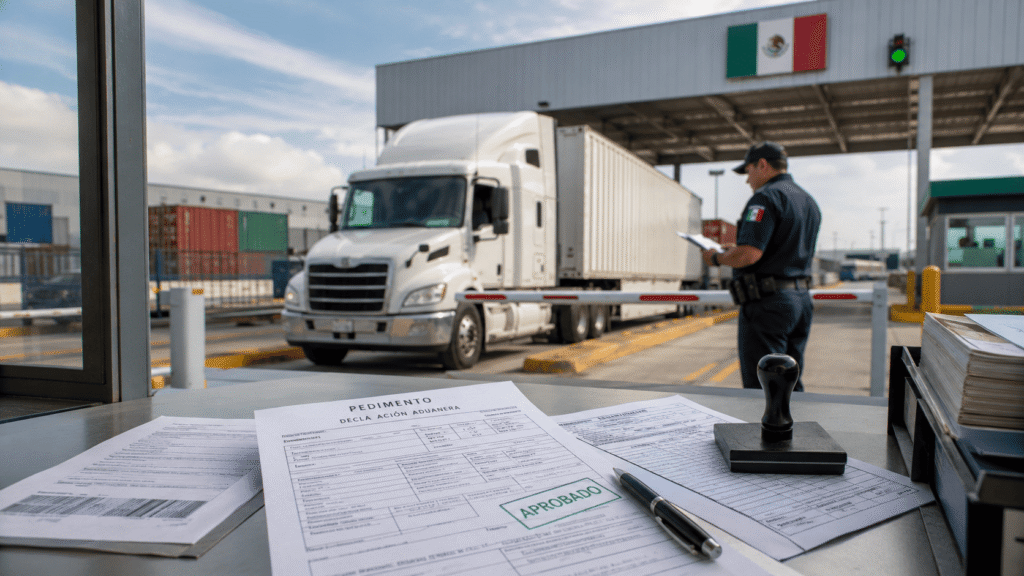
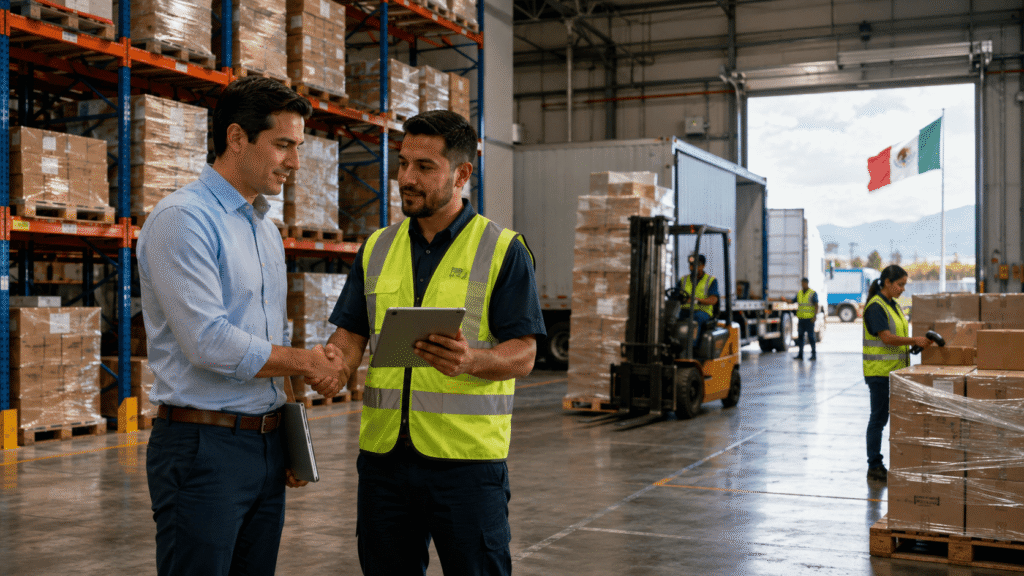
Loginam brings that mindset to nearshore logistics in Tijuana, pairing cross-border support with IMMEX-ready operations and ISO 9001:2015 quality systems.
For products that require it, Loginam also supports temperature-controlled storage conditions and controlled environments as part of its broader 3PL offering.
Looking for cold chain confidence and border-speed execution? Get a quote today!
Temperature Controlled Warehousing – FAQs
What Is Ambient Storage?
An ambient warehouse is a logistics facility that stores goods at “room temperature” (59°F to 77°F / 15°C to 25°C). Even though it’s fitted with basic HVAC systems to prevent extreme spikes, it generally operates at normal exterior conditions. It’s suitable for the safe storage of non-temperature-sensitive products like furniture, shelf-stable snacks, or packaged household items.
How To Climate Control A Warehouse?
To climate-control a warehouse, you’d need to combine high-capacity HVAC with industrial dehumidifiers, strong R-value insulation across walls and roof, and tight dock seals that prevent air leaks. To keep temperature and humidity uniform, use ceiling-mounted fans (HVLSs) that mix air and high-velocity diffusers to help the conditioned air spread evenly through the warehouse.
What Is The Difference Between Temperature-Controlled And Climate-Controlled Warehousing?
Temperature-controlled warehousing focuses on keeping products within a defined temperature range. Climate-controlled warehousing goes further by also managing factors like humidity and air quality, which matter for products that can warp, oxidize, or degrade under changing conditions.
What Products Usually Need Temperature-Controlled Storage?
Common examples include food, pharmaceuticals, certain chemicals, cosmetics, medical supplies, and some electronics. These products can lose quality, stability, or shelf life when they are exposed to the wrong conditions.
What Temperature Ranges Are Used In Temperature-Controlled Warehousing?
Most facilities operate across four broad zones: ambient, cool, refrigerated, and frozen. The right range depends on the product itself, its stability requirements, and how long it needs to remain in storage.
Why Is Real-Time Monitoring Important In A Temperature-Controlled Warehouse?
Because even a short temperature deviation can put inventory at risk. Real-time monitoring helps teams catch issues early, respond faster, and reduce the chance of spoilage, damage, or compliance problems.
What Happens If There Is A Power Failure In A Cold Storage Facility?
Well-run facilities rely on redundancy measures such as backup generators, UPS systems, and alert-based monitoring. These safeguards help maintain stable conditions and give operators time to respond before inventory is affected.
Does Loginam Offer Temperature-Controlled Warehousing In Tijuana?
Yes. Loginam positions temperature-controlled storage and controlled environments as part of its broader 3PL offering in Tijuana, alongside warehousing, cross-border logistics, and ISO 9001:2015 quality systems.
Can Temperature-Controlled Warehousing Support Cross-Border Operations?
Yes, especially when temperature-sensitive goods need to move through a larger logistics flow. Loginam’s site presents its Tijuana operation as a nearshore 3PL model that combines warehousing, cross-border support, and controlled-environment capabilities.
How Do I Know Whether I Need Ambient, Refrigerated, Or Frozen Storage?
It comes down to the product’s stability requirements. If heat, cold swings, or thawing can affect safety, quality, or performance, the storage environment should be matched to those limits from the start.