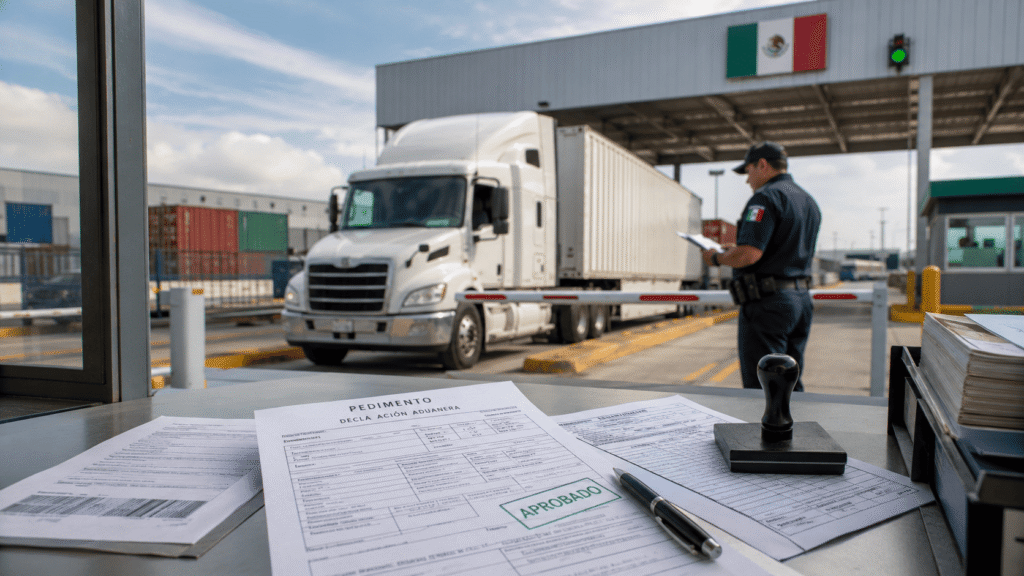
Smooth fulfillment takes shape before an item is even picked from the shelf. It starts with order processing: the workflow that checks, routes, and prepares each sales request for accurate execution.
TL;DR
- Order processing is the end-to-end workflow that carries a customer order from the moment it is placed to the moment the goods arrive, covering validation, inventory allocation, picking, packing, shipping, and returns.
- Order processing is the administrative side of an order that verifies and routes it, while fulfillment is the physical side that picks, packs, and ships the goods.
- Efficient processing lowers operating costs, improves delivery performance, and lets a business scale to higher order volumes, which supports both order accuracy and customer retention.
- Order processing performance is measured with metrics such as order accuracy rate, order cycle time, fill rate, perfect order rate, and cost per order.
What Is Order Processing?
Order processing is a core supply chain workflow that moves a customer request from order capture through fulfillment and shipment handoff. It makes sure the order is properly received, checked, matched with available inventory, and prepared for the next fulfillment step.
In practice, order processing connects customer demand with warehouse and logistics activity. It includes system-driven steps such as order entry, payment verification, inventory allocation, and status updates, as well as physical steps like picking, packing, labeling, and shipping preparation.
Simply put, order processing turns a customer purchase into a validated order that can move smoothly through fulfillment and shipping.
Why Is Order Processing Important?
In supply chain management, efficient order processing is a critical operational function, as it directly impacts your business’s costs, delivery performance, and capacity to handle higher volumes – ultimately strengthening customer retention.
Core Benefits Of Structured Order Processing Services
Whether you’re dealing with DTC or B2B fulfillment, efficient order processing helps your business:
Enhance Financial Performance
By minimizing errors, delays, and rework, companies can reduce costs tied to returns, missed shipments, stockouts, and excess inventory.
Improve Order Accuracy
A structured workflow helps ensure every order is validated, matched with the right inventory, and routed correctly before it reaches the warehouse floor.
Support Faster Fulfillment
When order details, inventory availability, and shipping requirements are clear from the start, warehouse teams can pick, pack, and ship with fewer delays.
Drive Scalable Growth
Smooth processing allows businesses to manage more orders across more channels without adding unnecessary operational strain.
What’s The Difference Between Order Processing And Fulfillment?
Simply put, order processing verifies and routes the order, while fulfillment physically moves the goods. They may be closely connected, but they refer to different parts of the supply chain workflow.
Order processing is the “brain” of the operation. It covers the steps that happen once an order is placed, including order validation, payment verification, inventory allocation, and routing.
Fulfillment, on the other hand, is the “brawn.” It covers the physical work needed to complete the order, including picking, packing, labeling, staging, and shipping the product to the customer.
Order Processing And Shipping: Strategic Synergy
Effective order processing and shipping must work in perfect harmony to meet customer delivery windows without eroding margins. Fast processing is essential, but speed is not the only priority for every customer segment.
In B2B settings, shipping performance is closely tied to order confidence. According to a recent B2B buyer report, 40% of respondents cite lack of transparency around stock and delivery dates as their top frustration, while 29% say inaccurate delivery times prevent them from ordering online.
DTC customers show a similar balance between speed, cost, and reliability, with 90% of U.S. consumers saying they would wait two or three days for delivery, especially if it helps them avoid shipping costs.

How Order Processing Works: The 7-Step Workflow
To move an order from capture to dispatch, order processing workflows generally follow these steps:
1. Order Placement & Capture
It all begins when a customer submits a request through an e-commerce site, marketplace, mobile app, EDI connection, B2B portal, email, or even over the phone.
To avoid bottlenecks and keep the entire workflow running smoothly, all such channels should feed into one clear record, so buyers get consistent information regardless of how and where the order is placed.
2. Validation & Verification
Once captured, order details must be verified for accuracy. This includes confirming customer and shipping details, validating SKUs, checking quantities and pricing, and authorizing payments, credit limits, or account terms.
To improve validation, AI-supported tools can also flag unusual behavior, mismatched details, suspicious payment activity, or abnormal PO (Purchase Order) patterns before the order moves forward.
3. Inventory Allocation & Management
At this stage, the system determines which warehouse or distribution center will fulfill the order.
The goal is to allocate inventory from the right location, avoid split shipments where possible, minimize extra handling and transfers, while keeping delivery commitments on track.
Allocation logic can have a measurable operational impact: in a 2026 large retail-network case study, advanced order allocation tools improved the percentage of requested batches shipped from 54.1% to 67.8% and same-day demand coverage from 24.3% to 37.8%, helping more orders move out from available inventory on time.
4. Picking & Fulfillment
In a common scenario, once the order is released to the warehouse, fulfillment teams retrieve the required items from storage.
To optimize warehouse movement and picking accuracy, the process may follow specialized strategies such as single-order, batch, zone, or wave picking depending on order volume, warehouse layout, and product profile.
The practical goal is not just speed, but fewer touches, fewer mis-picks, and cleaner handoffs into packing.
To reduce errors at the source, warehouse automation tools, barcode scanning, and RFID systems confirm each item against the order before it leaves its storage location.
5. Packaging & Shipping Preparation
Items are packed according to product requirements, carrier rules, and shipment profile. Cartonization helps teams match each order with the most efficient box size or packaging configuration, reducing wasted space, damage risk, and avoidable freight costs.
Before the shipment leaves the facility, teams also generate labels, shipping documents, and any customer or retailer-specific compliance paperwork needed.
6. Delivery & Tracking
Finally, the order is handed over to a carrier, and shipment data is pushed back into the OMS (Order Management System), customer portal, or EDI (Electronic Data Interchange) workflow.
In B2B, this visibility is especially important because buyers may need critical status updates, partial-shipment details, proof of delivery, and receiving documents to plan dock schedules in advance and resolve exceptions such as delays, shortages, damage, or delivery mismatches.
7. Post-Delivery Support & Returns
The order lifecycle does not always end at delivery.
Post-delivery work can include:
- Proof-of-delivery confirmation
- Shortage, damage, or missing-item claims
- Returns and exchange requests
- Refund or credit processing
- Warranty or repair requests
- Restocking decisions
- Invoice or payment reconciliation
The stronger the coordination between these steps, the easier it becomes to keep orders accurate, customers informed, and fulfillment moving without unnecessary friction.
Order Processing KPIs & Metrics You Should Track
A short set of metrics shows whether your order processing is accurate, fast, and cost-effective. Watching them over time tells you which step is dragging, so improvement effort lands where it changes the numbers rather than where it feels busy.
Order Accuracy Rate
Order accuracy rate is the share of orders processed without an error in items, quantities, pricing, or shipping details. Calculate it as accurate orders divided by total orders, times 100. A rate that slips usually points to validation gaps or manual data entry, and it is the metric most tied to returns and reships.
Order Cycle Time
Order cycle time measures how long an order takes from capture to dispatch. Shorter cycle times mean orders spend less time waiting between validation, allocation, and picking. Break it down by stage to see whether payment authorization, inventory allocation, or warehouse release is the bottleneck.
Order Fill Rate
Fill rate is the percentage of ordered units you can ship from available stock without a backorder. A high fill rate means inventory and allocation logic are matched to demand, while a low one signals stockouts or weak forecasting. It is worth tracking per SKU, since a strong overall rate can hide a few items that constantly fall short.
Perfect Order Rate
Perfect order rate is the composite metric: the share of orders delivered complete, on time, undamaged, and with correct documentation. Because it multiplies several sub-rates together, it drops fast when any one stage underperforms. It is the closest single number to the customer’s actual experience, which makes it a useful north-star metric for B2B accounts.
Cost Per Order
Cost per order captures what it costs to process one order, including labor, packaging, systems, and error-related rework. Watching it alongside accuracy and cycle time keeps speed gains honest: shaving time is only a win if it does not quietly raise the cost or error rate. A rising cost per order at steady volume is an early sign of process friction worth investigating.
Order Processing FAQs
How Long Does Order Processing Take?
Order processing time depends on how complex the order is and how automated the workflow is. For a standard e-commerce order with payment cleared and stock on hand, processing often finishes within a few hours to one business day, and picking, packing, and dispatch follow shortly after. B2B orders take longer when they involve credit checks, purchase order validation, or allocation across multiple warehouses. The biggest drivers are payment authorization speed, inventory availability, and how many manual steps sit between order capture and warehouse release.
What Is Express Order Processing?
Express order processing is an expedited workflow that prioritizes an order so it clears validation, allocation, and packing faster than standard handling. It usually means the order jumps the queue for payment verification and inventory allocation, gets picked and packed ahead of the normal batch, and is matched to a faster shipping service. Businesses use it for time-sensitive shipments, priority customers, or rush B2B replenishment. The tradeoff is cost: expedited handling and premium carrier service raise the per-order price, so it is applied selectively rather than by default.
How Can You Improve Order Processing?
Improving order processing starts with feeding every sales channel into one order record, so nothing is missed or entered twice. From there, automate validation to catch pricing, SKU, and payment errors before an order reaches the warehouse floor, and use allocation logic that ships from the right location to avoid split shipments. Barcode scanning and RFID cut mis-picks, while clear packing and labeling rules reduce rework. Tracking your accuracy rate, cycle time, and error rate tells you where the bottlenecks are, so you fix the step that actually slows fulfillment rather than guessing.
How Can You Streamline B2B Order Processing?
B2B order processing gets faster when the systems buyers use connect directly to your order workflow. Integrating EDI, B2B portals, and purchase order feeds into one OMS removes manual re-keying and speeds validation of quantities, pricing, and account terms. Automated credit and PO checks keep large or recurring orders moving without holds, and clear rules for partial shipments and backorders prevent stalled fulfillment. Sharing real-time stock and delivery-date visibility also matters: B2B buyers rank transparency around stock and delivery among their top frustrations, so accurate status data reduces back-and-forth and keeps orders confirmed.
Why Is My Order Still Processing?
An order usually stays in processing while it clears one of the early workflow steps rather than because something is wrong. Common holds include payment authorization pending, a mismatch flagged during validation (address, SKU, or quantity), or inventory being allocated across warehouses before release. For B2B accounts, credit-limit or purchase-order checks can add time. Orders placed after a daily cutoff also wait for the next processing batch. If the status has not changed for longer than the seller’s stated window, the fastest fix is to confirm payment cleared and that the items are in stock.
Why Outsource Order Processing?
For many growing businesses, internal order processing can become a bottleneck as volumes and complexity increase.
Outsourcing order processing to a 3PL provider allows organizations to access advanced technology without building the full infrastructure in-house, handle order spikes more efficiently, improve geographic reach, and scale faster.
For businesses serving U.S. markets, Loginam brings order processing, fulfillment, and cross-border logistics under one nearshore model from its Tijuana-based 3PL facility.
With flexible capacity, ISO-certified processes, and systems built to support B2B workflows, Loginam turns order complexity into a more controlled, scalable supply chain.
Ready to turn growing order volume into a smoother, more scalable operation? Talk to Loginam today!