TL;DR
- Order fulfillment covers every step from receiving inventory to delivery and returns, and each step affects speed, accuracy, cost, and customer satisfaction.
- Strong fulfillment performance helps businesses meet rising B2C and B2B expectations, protect margins, reduce errors, and scale without heavy infrastructure investment.
- In a 3PL environment, improvement often comes from better order release timing, smarter picking methods, cartonization, routing logic, and standardized exception handling.
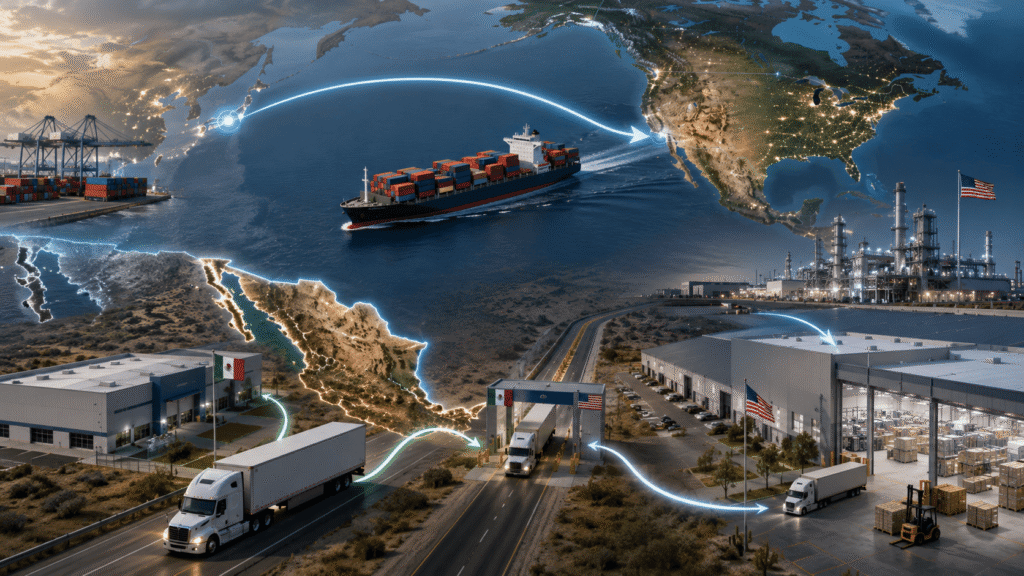
- For U.S. shippers, nearshoring B2B fulfillment in Mexico can shorten lead times, support value-added workflows, and improve responsiveness without adding unnecessary complexity.
In today’s increasingly complex supply chains, order fulfillment is a core driver of operational success.
What Is Order Fulfillment?
Order fulfillment is the process of receiving, processing, and delivering an order to a customer.
Order Fulfillment Involves These Key Steps
- Receiving and storing inventory
- Processing the order
- Picking and packing items
- Shipping the order
- Processing returns
So, Is Order Fulfillment Important?
The short answer is yes. If a brand, retailer, manufacturer, or distributor cannot efficiently fulfill orders to meet customer specifications, whether in B2C or B2B fulfillment, this can undermine customer experience and weaken profitability.
And because today’s supply chains are increasingly demanding and customer expectations are also high, efficient order fulfillment depends on accurate execution, smart process design, and the right 3PL services.
Let’s see what this means in practice.
Why Order Fulfillment Matters
Today, efficient order fulfillment execution is a critical driver of brand reputation and financial health.
Remember: a sale is never truly complete until your customer has their product in their hands. So, getting the process right creates value and helps your business stand out from its physical and digital competitors.
Meeting Today’s Customer Expectations
Today, the widely discussed “Amazon effect” has shifted standards in order fulfillment and shipping. Most B2C shoppers expect delivery within max. 2 days. And even though many are willing to pay extra for same-day service, free shipping is among the top decision factors.
- Rapid Delivery Standards: While a week-long wait was once acceptable, now, ecommerce customers generally expect their orders to arrive within 48 hours.
- Demand For Low Costs: Speed is not the only factor; approximately 80% of online shoppers are influenced by free shipping, and more than half will abandon their carts if shipping costs are perceived as too high.
- Transparency and Reliability: Customers demand a seamless experience that includes accurate, on-time arrivals and proactive delivery updates.
Similarly, in B2B order fulfillment, where online marketplaces account for more than 30% of business ecommerce sales, your corporate buyers expect the same level of customization and service as they receive in their personal purchases.
Upgrading Customer Experience (CX)
Fulfillment is the “moment of truth”. Poor delivery experiences – such as order inaccuracies, delayed deliveries, or damaged goods – can make or break your brand. On the bright side, meeting expectations consistently reinforces your reliability and trustworthiness.
- Brand Loyalty vs Negative Feedback: While accurate fulfillment builds the trust necessary for repeat purchases, errors such as late or damaged packages, trigger negative reviews and flood your support team, seriously damaging customer loyalty.
- B2B Relationship Management: In the B2B sector, where orders are larger and more valuable, reliable fulfillment reinforces long-term business partnerships and supply chain stability.
Supporting Speed, Accuracy & Financial Health
Fulfillment is a major cost center, and a single error can be hard on your margins.
- The High Cost of Errors: Manual mistakes are a breeding ground for lost value; small errors during fulfillment can pile up into hundreds of thousands of dollars of annual loss for large operations.
- Protecting Margins: Speeding up the “dock-to-stock” time, with strategies such as cross-docking, helps your business move inventory faster and generate revenue sooner. Precision accuracy also reduces the need for costly returns processing and replacement shipments.
- Strategic Financial Levers: In B2B environments, fulfillment efficiency supports healthier cash flow by accelerating payment cycles, thus lowering Days Sales Outstanding (DSO).
- Scalability Without Capital Risk: Outsourcing order fulfillment to a 3PL provider allows you to scale rapidly during demand spikes without making capital-intensive investments in logistics infrastructure, technology, or additional labor.
How The Order Fulfillment Process Works
The order fulfillment process typically involves several core steps that must function like a well-oiled machine to get your client’s order right, at the right cost, and at the right time.
Receiving Inventory
The very first stage involves accepting, counting, and inspecting incoming goods from manufacturers or distributors to ensure they meet quality standards and match purchase orders.
Inventory Reservation / Task Generation
This stage connects order entry to warehouse execution.
First, the WMS (Warehouse Management System) reserves inventory in real time, setting stock aside for the order before picking begins. That helps prevent overselling, reduce inventory errors, and protect ATP (Available to Promise) accuracy.
Then, it generates tasks based on order priority, warehouse capacity, carrier cutoffs, and service requirements.
By releasing work in the right sequence, businesses can reduce delays, improve labor efficiency, and keep the fulfillment process running smoothly.
Pick And Pack
Picking and packing is where the magic happens.
Staff or robots retrieve items from specific storage locations based on optimized picking lists. In some cases, individual items may require branded or non-branded kitting to create bundles, promotional sets, or subscription boxes.
Items are then packed in the right-size box or other container, with a focus on reducing unused space, which in turn helps keep DIM weight and shipping costs down.
QC / Exception Handling
Quality control checkpoints, often using barcode scanning or AI-based image verification, catch errors such as incorrect SKUs or damaged items before they leave the dock, allowing teams to flag exceptions and resolve them before shipment.
Shipping
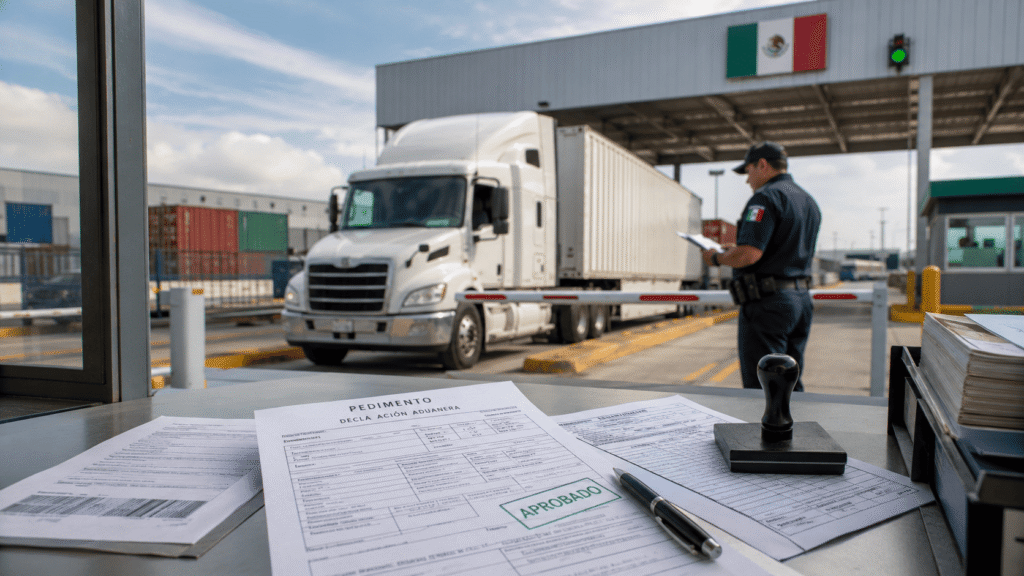
The order is assigned to a carrier based on cost, destination, and required service levels. Though it may sound simple, this is an intricate part of the fulfillment process and often one of the costliest.
Large organizations usually work with a few long-standing carrier partners. SMBs, on the other hand, often rely on their 3PL, which can leverage relationships with multiple carriers to support capacity and specific service needs.
Carrier Handoff / First-Mile Optimization
This step involves coordinating dock schedules to ensure timely pickups and consolidating shipments to secure volume discounts and improve outbound efficiency. First-mile optimization also helps reduce handoff delays that can disrupt the rest of the delivery timeline.
Beyond that, it supports your sustainability goals, as fewer miles traveled mean lower CO2 emissions across the transportation network.
Delivery
At the final stage of the fulfillment process, the order reaches its destination.
In B2C, that often means delivery to the customer’s doorstep, sometimes through multiple carriers to improve last-mile efficiency. In B2B, shipments may move between facilities before reaching the final consignee.
Reverse Logistics
This post-delivery loop handles returns, condition grading, and restocking or repackaging of items.
Reverse logistics is one of the most complex parts of fulfillment simply because it’s unpredictable. This is because you really never know when a customer will want to return their purchase, and on top of that, every return can take a different path: items can be restocked, reboxed, and remarketed, recycled, donated, or otherwise processed.
Types Of Order Fulfillment
While the core process is identical, different order fulfillment scenarios carry their own nuances:
Retail Order Fulfillment
Sending products in bulk to retail stores or distribution hubs requires high accuracy and strict adherence to a retailer’s “routing guide” to avoid expensive chargebacks.
Ecommerce Order Fulfillment (B2C)
Delivering individual orders directly to consumers (DTC) has a high focus on speed and a branded unboxing experience.
B2B Order Fulfillment
Managing high-volume, bulk transactions between companies often involves palletized freight, Electronic Data Interchange (EDI) compliance, and complex documentation.
Though it is often overshadowed by B2C, B2B is a massive market. In ecommerce alone, B2B sales are expected to reach $36 trillion by the end of 2026.
How To Improve Order Fulfillment Process In A 3PL Environment
To truly optimize order fulfillment, you need to view it as a chain of decisions that begins before an order is even picked.
Here are some things to consider:
1. Optimize Order Release Timing: Dynamic Release Logic
One common fulfillment mistake is relying on fixed batch schedules, such as a morning wave and an afternoon wave.
Releasing orders too early can overwhelm the warehouse, causing congestion in picking areas while packing stations wait for missing items. Releasing them too late can lead to missed carrier cutoff times and delayed shipments, even when inventory is available.
To avoid this, many 3PLs now use dynamic release logic that adjusts to real-time warehouse capacity and carrier pickup schedules. This helps smooth the daily workload and reduce costly bottlenecks later in the day.
2. Refine Picking-Method Choice: Reducing Travel Time
In a typical warehouse environment, travel time can consume more than 50% of a picker’s total shift. To reduce this, 3PLs typically match picking methodologies – such as discrete, zone, batch, or cluster picking – to the specific velocity of your SKUs.
For instance, a brand with a high concentration of fast-moving products benefits most from zone picking, where workers pick within assigned warehouse areas. Similarly, batch picking, where multiple orders are picked in a single trip, also helps shrink travel time.
In contrast, apparel or beauty brands with massive SKU variety may require cluster picking, i.e., several orders being picked at once into separate bins or containers, to accommodate fragmented order profiles.
Tech-driven 3PLs often utilize Warehouse 4.0 technology, such as Autonomous Mobile Robots (AMRs) or voice-directed picking, to further reduce travel paths and human error.
This is a crucial part of the order fulfillment process. Indeed, selecting the wrong picking method can double labor costs and reduce total facility throughput by up to 40%, thus undermining operational health.
3. Implement Smart Cartonization: Precision In Packaging
Efficient packing is no longer just about putting items in a box; it is a data-driven process called cartonization that takes place before physical labor begins.
Sophisticated 3PLs use real-time software to analyze an order’s physical dimensions and weight and then select optimal boxes and dunnage.
Furthermore, smart cartonization reduces damage rates and prevents carrier penalties associated with poorly sized shipments, so that every package is optimized for both protection and cost-efficiency.
4. Enhance Routing Logic: Beyond Geographic Proximity
Traditional logistics often default to the “closest warehouse” model, but modern order fulfillment requires more nuanced routing logic.
Advanced routing engines now score eligible nodes based on real-time congestion signals, current labor loads, and specific carrier performance metrics for that specific day.
True, simply routing an order to the closest facility can backfire if that node is currently overwhelmed, leading to delays that far outweigh the benefits of geographic proximity.
Furthermore, smart logic accounts for inventory age and compliance rules, such as FEFO (First-Expired, First-Out) for perishable goods.
By optimizing these decisions, businesses can reduce shipping variances and ensure that orders are fulfilled from the most capable node, protecting the delivery promise and reducing overall logistics spend.
5. Standardize Exception Handling: Automating The Friction Points
Many fulfillment delays happen outside the normal pick-pack-ship flow, usually when an order runs into a problem that needs to be fixed.
Common issues such as address errors, inventory mismatches, or SKU mix-ups often require manual intervention, which can slow the entire process and delay other orders.
To reduce this friction, 3PLs now use standardized, automated workflows that help resolve common issues faster.
For example, some facilities use AI-based verification at quality control checkpoints to catch errors before orders leave the dock, allowing teams to trigger an immediate re-pick or approval.
This helps maintain service consistency and prevents small data issues from turning into larger customer service problems.
The Advantage Of Nearshoring B2B Fulfillment In Mexico For US Shippers
Mexico is seeing record growth in its logistics sector. Among the $36.9 billion in Foreign Direct Investment (FDI) Mexico attracted last year (2025), transportation received $12.7 billion, and storage attracted $5.2 billion.
Against that backdrop, as a U.S. shipper, positioning your 3PL services in Mexico, particularly in neighboring fulfillment hubs like Tijuana, can provide a major competitive edge.
Proximity And Velocity
Shipping B2B orders from Mexico takes days rather than the weeks required for offshore ocean freight, allowing for leaner inventory and faster response to market shifts.
3PL Value Added Warehousing
Specialized providers offer 3PL value-added warehousing under programs such as IMMEX, which allow duty-free temporary imports of materials.
Plus, essential services like kitting and assembly are performed near the border, moving products into U.S. distribution lanes much faster.
Order Fulfillment FAQs
What Is Order Fulfillment?
Order fulfillment is the end-to-end process of receiving inventory, processing orders, picking and packing items, shipping them to the customer, and handling returns when needed. In practice, it is the operational system that turns demand into delivered products.
What Is Order Fulfillment In Ecommerce?
In ecommerce, order fulfillment refers to how online orders are processed and delivered directly to the end customer. It usually places a stronger emphasis on fast shipping, accurate order handling, tracking visibility, and a consistent unboxing experience.
What Is Order Fulfillment In Supply Chain Management?
Within supply chain management, order fulfillment is the execution layer that connects inventory, warehousing, transportation, and delivery. It ensures products move from storage to the final destination in a way that supports service levels, cost control, and customer satisfaction.
What Does Awaiting Fulfillment Mean On An Order?
Awaiting fulfillment usually means the order has been received, but warehouse processing has not been completed yet. The inventory may still need to be reserved, picked, packed, verified, or released for shipment.
How To Improve The Order Fulfillment Process?
Improving order fulfillment usually starts with better execution at the operational level. That includes optimizing order release timing, choosing the right picking method, using smarter cartonization, refining routing decisions, and standardizing exception handling so small issues do not create bigger delays.
How To Calculate Fulfillment Cost Per Order?
Fulfillment cost per order is typically calculated by dividing total fulfillment costs by the total number of orders processed during the same period. Those costs may include labor, storage, packaging, shipping coordination, returns handling, and the systems used to support fulfillment operations.
How To Calculate Order Fulfillment Rate?
Order fulfillment rate is generally measured by comparing the number of orders fulfilled successfully against the total number of orders received. Businesses often use this metric to monitor execution quality, identify bottlenecks, and track whether service performance is improving over time.
Does A 3PL Help Improve Order Fulfillment?
Yes, a capable 3PL can improve order fulfillment by bringing together warehouse execution, carrier coordination, labor flexibility, and fulfillment technology under one operating model. This is especially valuable when order volumes fluctuate or when businesses need to scale without investing heavily in their own logistics infrastructure.
Why Does Nearshoring Matter For B2B Order Fulfillment?
Nearshoring can improve B2B order fulfillment by shortening transit times, reducing dependency on long offshore lead times, and making replenishment more responsive. For U.S. shippers, positioning fulfillment closer to the border can also support value-added workflows and faster movement into domestic distribution channels.
Looking For Nearshoring Logistics Experts In Mexico?
With fulfillment capabilities in Tijuana and support for compliance-driven, value-added workflows, Loginam helps businesses move products closer to demand without adding unnecessary complexity.
Nearshore smarter, fulfill faster, and stay closer to what drives growth. Contact Loginam today!