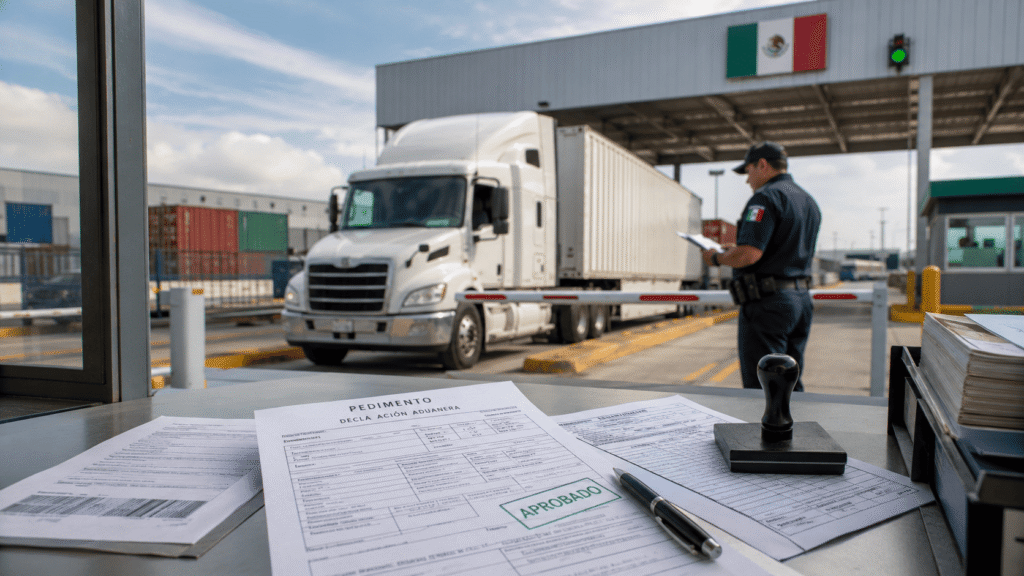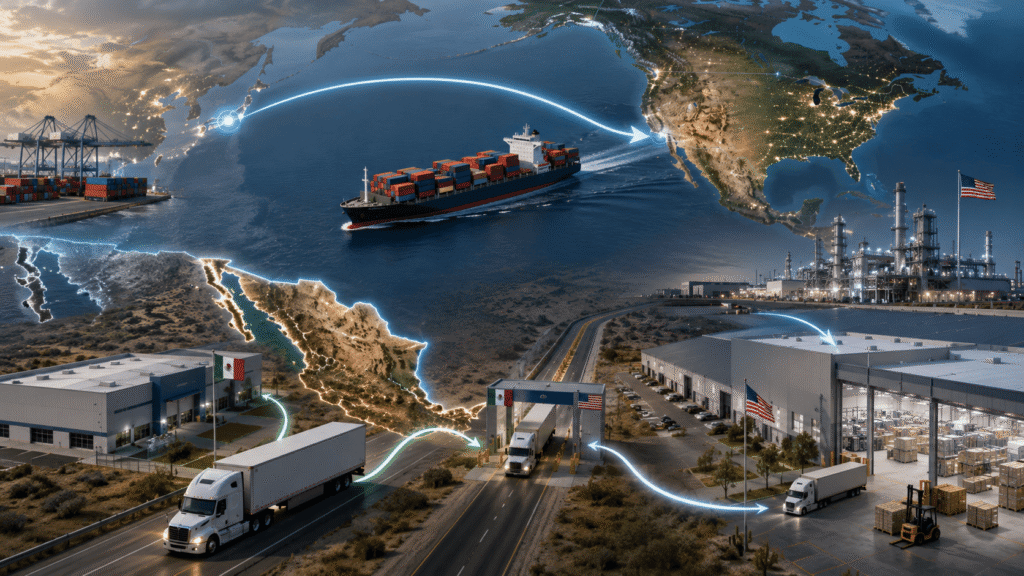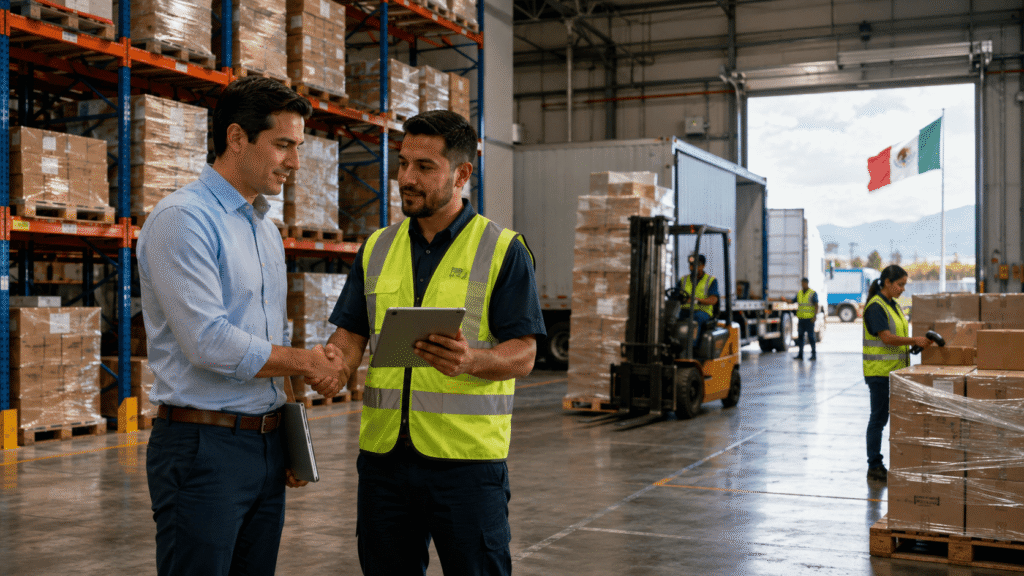
Inbound logistics is where supply chain performance begins. Before a product can be manufactured, stored, fulfilled, replenished, or shipped across the border, the right materials or inventory have to arrive first.
Today, inbound logistics goes far beyond what happens at the receiving dock. It is a major part of supply chain control. In fact, the global inbound logistics market is projected to reach $1.86 trillion this year (2026), with sustained growth expected well into the next decade.
What Is Inbound Logistics?
Inbound logistics is the process of bringing materials, components, or finished inventory from suppliers into a business, then managing the activities involved in receiving, handling, and storing them so they are ready for production, distribution, retail replenishment, or cross-border movement.
It covers the supply side of a logistics operation and focuses on getting physical goods and materials into the right location, such as a factory, warehouse, distribution center, fulfillment center, or retail store, at the right time, in the right quantity, and in usable condition.
How It Fits Into The Inbound Supply Chain
The broader inbound supply chain includes sourcing, purchasing, supplier management, and planning, which define what needs to be ordered, from which suppliers, and under what terms.
Inbound logistics takes over once those goods are ready to move, covering their transportation, receipt, inspection, handling, and storage as they enter the business.
When this flow is coordinated well, goods arrive on time, match the expected quantity, meet handling or quality requirements, and come with the documentation needed to keep production, fulfillment, store replenishment, distribution, or customer delivery moving.
When it is not, the disruption usually shows up later as delays, stockouts, congestion, rush freight, or missed commitments.
Key Components Of Inbound Logistics
Each part of inbound logistics affects how reliably goods move into a business and how quickly they become available for the next step. The main components are:
Sourcing And Procurement
Identifying, vetting, and contracting with suppliers that can provide the right materials, components, or inventory at the right quality, cost, and lead time. While sourcing sits in the broader inbound supply chain, it directly affects how predictable the inbound logistics flow will be.
Supplier Management
Coordinating with vendors to align delivery schedules, quality standards, packaging requirements, documentation, and lead times. Strong supplier relationships reduce variability across the inbound supply chain.
Transportation Management
Planning and executing the physical movement of goods from origin to the receiving location by truck, rail, air, ocean, or intermodal freight.
In fact, transportation currently accounts for approximately 38% of inbound logistics revenue, with road and trucking holding the largest mode share at 45%. That concentration in a single mode creates exposure when pricing shifts.
Receiving And Inspection
Unloading shipments, verifying quantities against purchase orders, checking for damage, confirming quality or handling requirements, and logging inventory upon arrival. Errors at this stage compound downstream.
Warehousing And Inventory Management
Warehousing and inventory management cover how goods are stored, tracked, protected, and made accessible after receiving. This includes allocating storage space, monitoring stock levels, and keeping materials in the right conditions without creating unnecessary build-up.
This stage can also include value-added services such as kitting, labeling, repacking, quality checks, cross-docking, or light assembly, so goods can move more smoothly into the next stage.
Internal Transportation
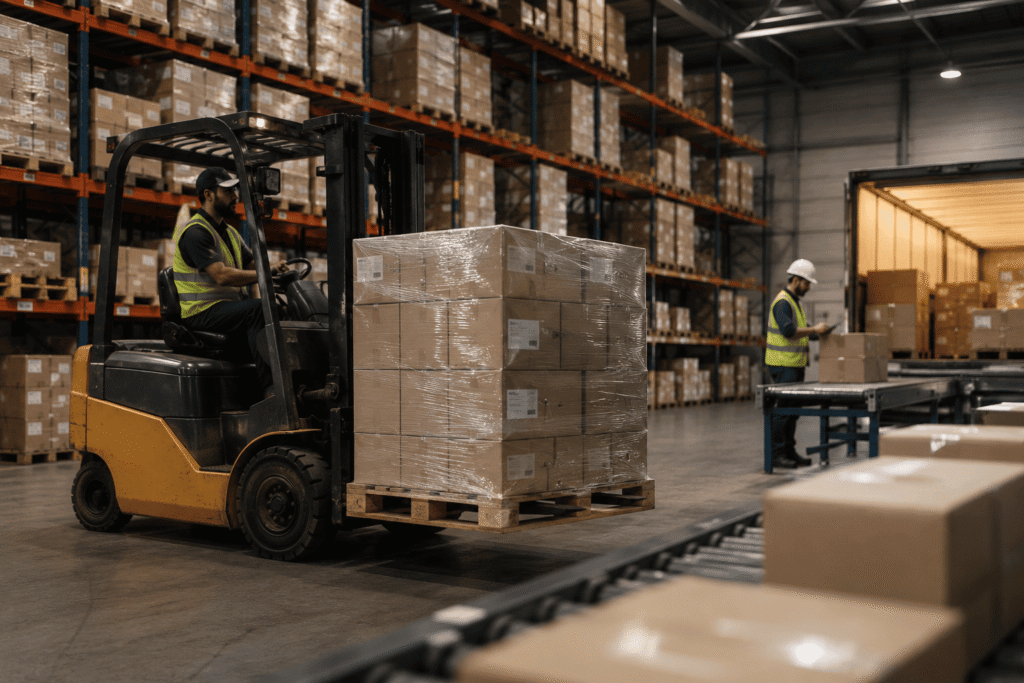
Moving materials within a facility from receiving docks to storage locations, staging areas, fulfillment zones, or directly to production lines, keeping inbound goods flowing after they enter the building.
Poor internal movement can create dock congestion, misplaced inventory, production delays, and extra handling, even when the outside transportation plan worked as expected.
Information Management And Visibility
Using tracking data, warehouse systems, inventory records, and supplier updates to maintain visibility into what is ordered, in transit, received, stored, available, or delayed.
This visibility helps teams spot delays, plan capacity, and resolve exceptions before problems reach production or fulfillment.
Inbound Logistics Process
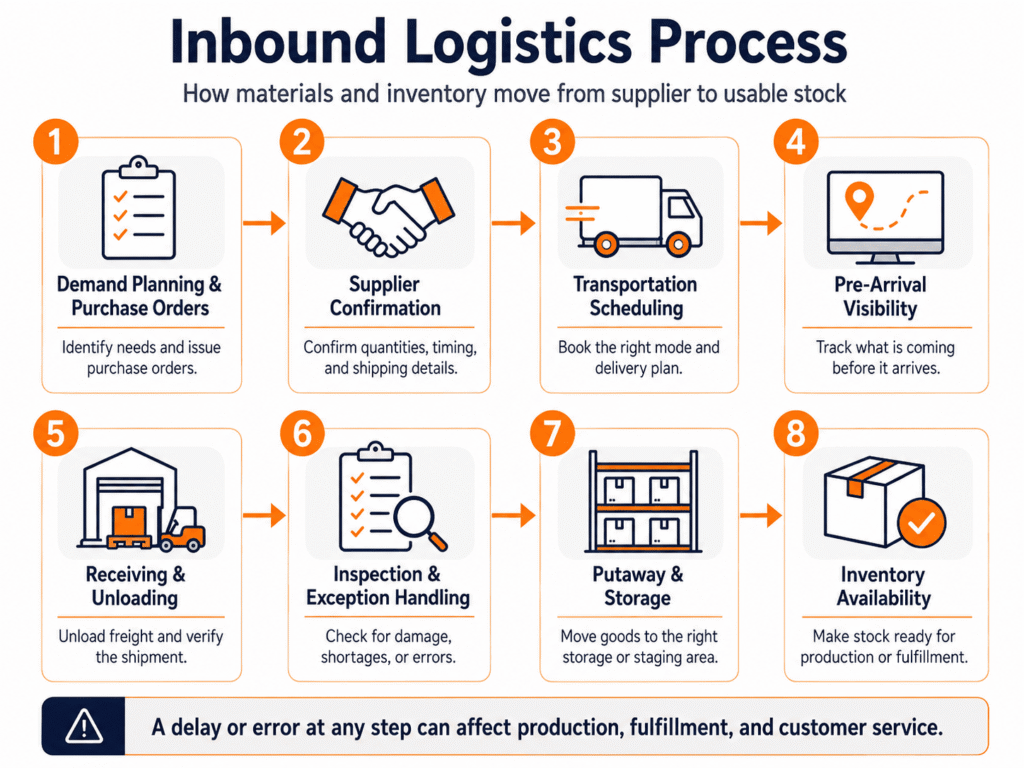
The inbound logistics process usually follows a clear sequence. The details vary by business model, but the core flow is similar.
1. Demand Planning And Purchase Orders
The process starts before anything moves. A company identifies what it needs, when it needs it, and how much should be ordered. This can be based on sales forecasts, production schedules, replenishment plans, seasonal demand, or customer commitments.
Purchase orders then give suppliers the formal instructions to prepare goods.
2. Supplier Confirmation
After the purchase order is issued, the supplier confirms availability, production timing, shipping dates, quantities, packaging requirements, and any special handling instructions.
The supplier then prepares the order according to the agreed quantities, packaging instructions, labeling requirements, and shipping window.
This step matters because inbound logistics depends on timing. If the supplier misses the promised date, the transportation plan and warehouse schedule may also change.
3. Transportation Scheduling
Once goods are ready, transportation must be scheduled. The decision may depend on urgency, cost, border requirements, shipment size, delivery location, whether the goods need consolidation, and the best transportation mode, such as road, rail, air, ocean, or intermodal freight.
4. Pre-Arrival Visibility
Before the shipment arrives, the receiving location should already know what is coming. Advance shipment notices and carrier updates help the site plan labor, space, capacity, and onward movement.
Without pre-arrival visibility, receiving becomes reactive, and small issues can quickly turn into delays, congestion, or inventory errors.
5. Receiving And Unloading
When the shipment arrives, the receiving team unloads it, checks the load against documentation, reviews visible damage, confirms quantities, and updates the system.
This is where physical freight becomes usable inventory.
6. Inspection And Exception Handling
If goods are damaged, short, mislabeled, over-shipped, missing documents, or do not meet quality or compliance requirements, the exception should be recorded immediately. That allows the business to work with the supplier, carrier, or customer before the issue spreads.
Clean exception handling protects production schedules and fulfillment accuracy.
7. Putaway And Storage
After goods are accepted, they move to the correct storage location, staging area, or, in a manufacturing environment, directly to the production floor.
A Warehouse Management System (WMS), barcode scanning, and clear location controls help ensure inventory can be tracked, located, and retrieved when needed.
Effective putaway is what turns inbound freight into available, usable stock.
8. Inventory Availability
Finally, the inventory becomes available for the next operational step, such as production, kitting, assembly, fulfillment, or distribution. The system update can also trigger replenishment signals, reorder planning, or allocation decisions.
This is the point where inbound logistics connects directly to revenue, customer service, and operational performance.
Each of these steps carries cost and risk. Disruption at any point – a delayed shipment, a mislabeled pallet, a receiving bottleneck – sends ripple effects through the entire operation.
Inbound To Manufacturing: How Materials Flow Into Production
When goods flow directly into a production environment, the stakes of inbound logistics rise.
What Is Inbound To Manufacturing?
Inbound to manufacturing is the movement of raw materials, components, packaging, parts, and sub-assemblies into a factory or production facility so they are available when production needs them.
This flow has to be tightly aligned with production schedules.
If a shipment arrives late, incomplete, damaged, or with the wrong materials, the issue can quickly become a line stoppage, a missed production window, or a costly change in the manufacturing plan.
Balancing Buffer Stock And Lean Inventory
Still, buffer stock can help absorb supplier delays or transportation issues without stopping production. However, holding too much inventory creates another problem: it takes up warehouse space, ties up working capital, and can make materials harder to manage.
That tradeoff is becoming more important as companies try to protect production without carrying more inventory than they need.
Recent U.S. logistics data shows how carefully companies are managing that tradeoff. In February 2026, inventory levels stood at 53.8, compared with 64.8 a year earlier, while inventory cost expansion slowed from 77.3 to 67.8.
Visibility Becomes More Important
The bigger point is not just that companies are holding less stock. Leaner inventory leaves less room for inbound delays, which makes supplier reliability, receiving accuracy, and material visibility even more critical.
Manufacturers need to know what is coming, when it will arrive, whether it matches the purchase order, and when it becomes available for staging, kitting, assembly, or production use.
Inbound Logistics Examples: Real-World Applications
The examples below show how stronger inbound logistics can improve cost control, inventory movement, replenishment speed, and production reliability.
In each case, supplier coordination, transportation planning, and inventory visibility affect how quickly goods become available for the next step.
Zara: Centralized Inbound Flow For Fast Store Replenishment
Zara uses a centralized logistics model where products from different origins move into its brand distribution centers in Spain. There, garments are picked, sorted, packed, pre-priced, tagged, and shipped to stores. According to Inditex, store distribution happens twice a week, and the academic case notes that clothes stay in the distribution center from a few hours to a maximum of three days.
This keeps the distribution center focused on movement rather than long-term storage.
From an inbound logistics perspective, Zara shows how centralized receiving, rapid sorting, and frequent store replenishment can keep goods moving through the network instead of sitting idle in inventory.
Toyota: Milk-Run Deliveries For Production Parts
Toyota’s production parts logistics is built around Just-in-Time: moving only the parts needed, when they are needed, and in the amount needed.
In practice, that means inbound logistics is not used simply to fill factory storage. It is used to keep production supplied with frequent, carefully timed deliveries that match the needs of the line.
For example, Toyota Motor Vietnam applied a milk-run approach, where one delivery vehicle collects parts from multiple suppliers on a planned route.
After the change, monthly inbound transportation costs fell from $5,042 to $1,665, while monthly transport distance fell from 8,800 km to 2,637.5 km, supporting a cleaner, more efficient inbound flow.
Optimize Nearshore Inbound Logistics With A Tijuana 3PL
Inbound logistics is not a problem solved once. It requires consistent execution across every step because any gap in that chain affects what happens next, whether goods are headed to a warehouse, a production floor, or across the border.
For U.S. companies building nearshore operations in Mexico, Loginam provides the Tijuana-based infrastructure to receive, store, prepare, and move goods with greater control.
Our 3PL model combines flexible warehousing, value-added workflows, and cross-border coordination, enabling inventory to remain closer to the U.S. market without requiring a dedicated facility.
Make inbound logistics a point of control, not a source of surprises. Contact us today!
FAQs
What Are The Three Types Of Logistics?
The three main types of logistics are Inbound, Outbound, and Reverse logistics. Inbound focuses on the movement of materials, components, packaging, or inventory from suppliers into a facility. Outbound involves moving finished products from the company to customers. Reverse logistics manages the return of goods from the end user back to the seller or manufacturer, covering repairs, recycling, or disposal of products.
What’s The Difference Between Inbound And Outbound Logistics?
Inbound logistics covers the supply side of a business, moving materials, components, packaging, or inventory from suppliers into the right facility. Outbound logistics covers the demand side, moving finished goods to customers, stores, distributors, or other destinations. In short, inbound brings goods in; outbound sends finished value out.
What Is Inbound Logistics In A Value Chain?
In Porter’s traditional value chain model, inbound logistics is the first primary activity that brings inputs into the business. It covers receiving, handling, inspection, storage, and movement of materials or inventory before production, fulfillment, or distribution. When this stage works well, the rest of the value chain has a stronger operating base.