TL;DR
- A 3PL is a third-party logistics provider that handles warehousing, inventory, fulfillment, transportation, reverse logistics, and other supply chain functions for a business.
- Companies use 3PLs to reduce capital costs, improve flexibility, gain logistics expertise, and access better systems visibility without building everything in-house.
- A 3PL usually makes sense when order volume, operational complexity, or geographic reach outgrows your internal logistics capabilities.
- Choosing the right 3PL means evaluating location, systems integration, operational fit, communication, and pricing transparency, not just available capacity.
- While outsourcing logistics brings major advantages, strong results still depend on clear expectations, clean integration, and an operational partnership that fits your business.
Why do businesses outsource to 3PLs? Mainly because these providers offer the expertise and infrastructure to streamline operations and optimize the complex flow of goods from manufacturer to final customer and back, at the end of a product’s lifecycle.
But let’s rewind to what 3PL actually is.
What Is A 3PL? (Third-Party Logistics Meaning)
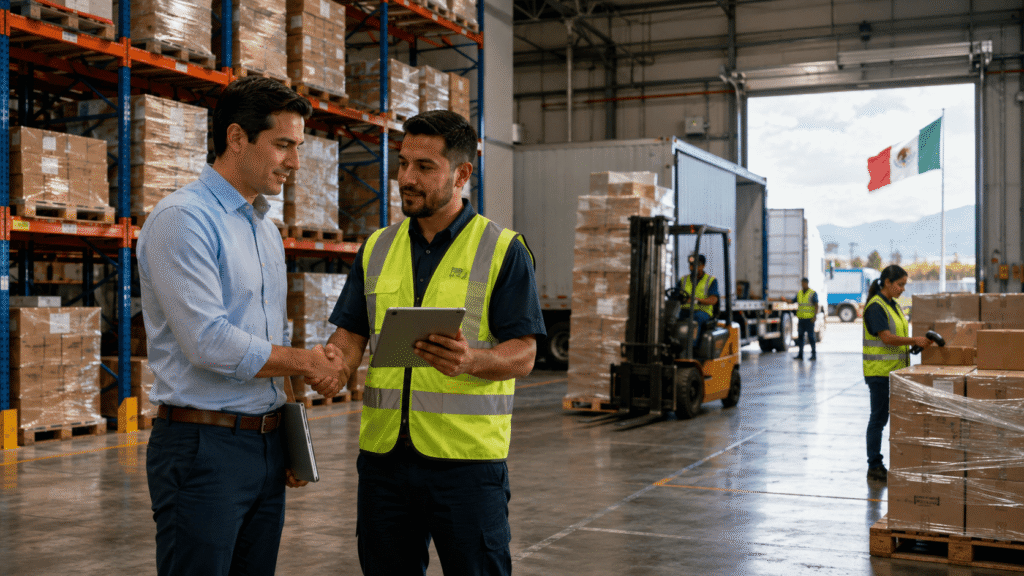
A 3PL is a third-party logistics company that manages a variety of supply chain functions for a business. 3PLs act as an extension of a company’s own logistics department, taking over critical functions that require capital investment and specialized knowledge, such as warehousing and inventory management, order fulfillment, transportation management, and reverse logistics.
How It All Began: Short History Of The 3PLs
The rise of third-party logistics (3PL) providers took place in the 1970s, when companies began outsourcing certain logistics functions, such as transportation and warehousing, to third parties.
In 1980, the Motor Carrier Act, which deregulated the US trucking industry, created a more competitive and fragmented market that led to the gradual emergence of specialized logistics providers.
In the 1990s, as globalization expanded and emerging economies like China and India gained power, supply chains became more complex. To stay competitive, businesses needed to focus on their core competencies and outsource logistics to specialized 3PL firms.
Fast-forward a few years, and with the rapid expansion of e-commerce and technological advancements of the 2000s, the demand for faster, cheaper, yet more complex fulfillment solutions made 3PL providers essential partners for everyone involved in the modern supply chain.
Today, the 3PL logistics market is a cornerstone of global trade, currently estimated at USD 1.15 trillion, and is expected to reach USD 1.48 trillion by 2030, at a CAGR of 5.18%.
How Does 3PL Work?
A 3PL specializes in handling source-to-shelf logistics and their return flows, moving goods efficiently through the supply chain. In practice, 3PLs boost clients’ operational agility and profitability by taking on and optimizing day-to-day logistics tasks:
Warehousing & Inventory Management
3PLs provide the physical space to store goods and also manage stock levels using advanced Warehouse Management Systems (WMS) and Inventory Management Systems (IMS), which are, in turn, connected to their clients’ Electronic Data Interchange (EDI) or directly integrated into their e-commerce platforms.
Order Fulfillment (Pick And Pack)
This is a core 3PL service where items are picked from storage, packed correctly, and prepared for shipment. In B2C scenarios, like e-commerce, different ordered items are packed together and shipped to the consumer’s home address.
B2B order fulfillment, on the other hand, focuses on consolidating large volumes of products shipped or fulfilling massive wholesale purchases. Either way, amidst thousands of SKUs and storage ft², surges, shortages, and pressing customer demands, order fulfillment is a highly complex process that can make or break a brand.
Transportation Management
Anyone can ship a parcel. But for a business, 3PLs have all the right connections and knowledge to arrange optimal parcel or freight shipping across all modes (air, ocean, rail, road). They select carriers, negotiate rates, handle necessary paperwork, design optimized routes, and oversee shipments in real time to their final destination.
Reverse Logistics
When products are returned, fail under warranty, or reach the end of their useful life, 3PLs manage this complex reverse flow, handling each item in the most cost-effective and sustainable way: restocking, refurbishing, donating, recycling, or responsibly disposing of products.
In B2B environments, reverse logistics 3PLs manage large-scale, compliance-sensitive returns – such as full equipment or infrastructure refreshes – alongside complex, time-critical product recalls that would otherwise put heavy pressure on internal teams.
Value-Added Services
The true value of 3PLs often lies in their flexibility to meet a client’s specific needs at every level, with optimized operations and scalable solutions as the core drivers of future growth.
Today, 3PLs offer extensive customized services such as kitting (grouping separate items into a single SKU), assembly, custom labeling, and even light manufacturing to get products market-ready faster, without the client needing to invest in extra facilities or personnel.
By outsourcing core logistical tasks, a company can focus on product development, marketing, and/or sales, without having to deal with all the complexities of supply chain management.

3PL Examples: Real-World Business Success Stories
In the fast-paced and multifaceted arena of global trade, unexpected challenges are inevitable. As a result, third-party logistics are valuable partners that can solve intricate operational problems their clients face.
Here are a few examples of how 3PLs help their clients not just cope with challenges, but continue to perform at a high level.
Third-Party Reverse Logistics Clears Returns Backlogs
A global footwear brand was stuck with about 1,000 trailers of unprocessed returns, taking weeks to sort manually.
When a 3PL came into play, they first applied data science and machine learning to incoming returns data to prioritize high-value items, i.e., those with the biggest resale potential, to accelerate capital recovery.
Moving on to a dedicated reverse logistics center, they automated processing with smart tech such as mechanized sorting, touchless scanners, and goods-to-person robotics, to clear the backlog and bring return cycles down to roughly 48 hours.
Optimizing Monthly Shipments With 3PL Tech
A pet nutrition company handling more than 45,000 deliveries per month needed to optimize its complex North American transport network.
The 3PL provided the high-tech digital infrastructure required for full network visibility. The system delivered real-time tracking and forecasting tools, creating a single source of truth for all operations and enabling proactive issue resolution. The brand and its 3PL worked as one team, connecting their systems directly and staying in constant, transparent communication.
The collaboration resulted in a consistent 99% on-time delivery rate, ensuring customers always received their specialized products on schedule.
Scalable Growth Powered By 3PL Fulfillment For Ecommerce
A fast-growing cosmetics brand was overwhelmed by demand, facing a 30,000-customer waitlist and an in-house operation that couldn’t handle the surge.
The company decided to outsource fulfillment to a 3PL that provided a state-of-the-art WMS that integrated with their e-commerce platform. This approach automated order processing and provided real-time inventory visibility. Leveraging the 3PL’s distributed warehouse network also brought inventory closer to customers, enabling scalable two-day shipping.
This approach helped the brand clear the backlog and achieve a 50% increase in market share within the first year.
And these are some of the measurable benefits businesses can gain. Let’s look at some more.
3PL Benefits: 4 Reasons To Outsource Your Logistics Operations
Partnering with a 3PL offers numerous strategic and operational advantages that help businesses compete more effectively in today’s fast-paced market.
Cost Efficiency & Resource Management
Outsourcing logistics is often more cost-effective than building an in-house operation. Cost pressures – particularly transportation costs – are the top challenge US shippers face.
By working with a third-party service provider, businesses avoid the massive capital expenditure required for warehouses, transportation fleets, and technology systems.
Furthermore, 3PLs use their scale to negotiate better rates with carriers and pass those savings onto clients.
Expertise & Industry Knowledge
Logistics professionals at 3PLs specialize in optimizing supply chain processes.
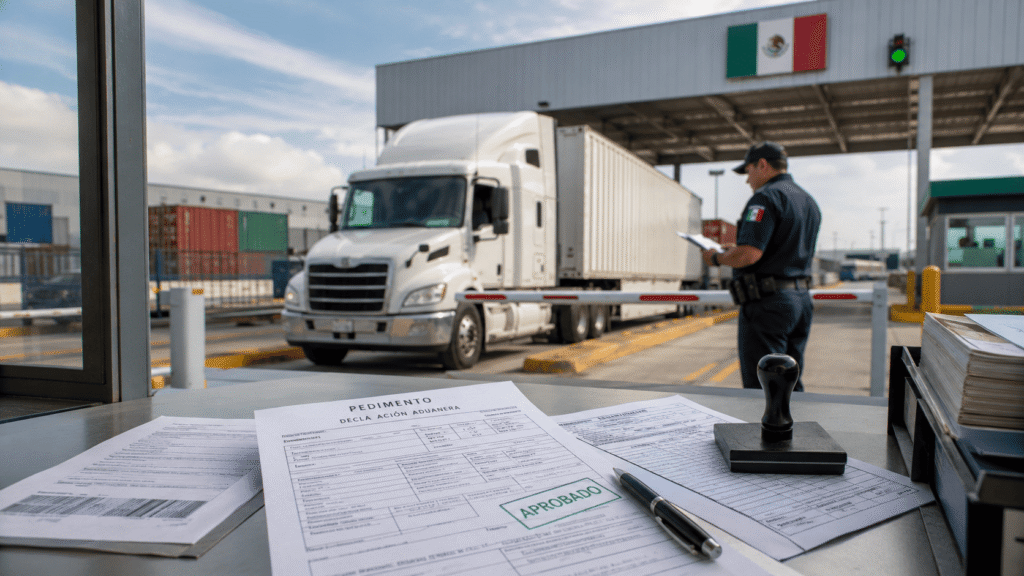
They stay current with the latest regulations, trade compliance rules (like customs documentation or nearshoring programs such as IMMEX), and industry best practices.
This expertise ensures risk-free, compliant, and accurate operations. Indeed, 68% of shippers say their 3PLs are providing new and innovative ways to improve logistics efficiency.
Scalability & Flexibility
A 3PL can easily scale operations up or down to meet fluctuating demand, such as during seasonal peaks or promotional campaigns. This flexibility ensures businesses aren’t locked into fixed space or headcount commitments, allowing them to adapt quickly to market changes.
Technology & Visibility
Modern 3PLs invest heavily in advanced technology, such as Warehouse Management Systems (WMS), Transportation Management Systems (TMS), and real-time visibility platforms.
These systems automate data flows, reduce errors, and provide clients with continuous visibility into inventory levels and order status, often achieved by connecting client ERP or EDI systems directly.
When Should A Business Use A 3PL?
A 3PL becomes the right fit when logistics starts limiting the business instead of supporting it. That usually happens when volume grows, service expectations rise, or expansion adds new operational demands that are difficult to manage with internal space, systems, and staff alone. At that point, outsourcing is not just a cost decision. It is a way to build a logistics model that can scale more reliably with the business. Definitions of 3PL consistently center on this idea: a third party takes over logistics execution so the company does not have to manage every warehousing, fulfillment, and transportation function itself.
When In-House Logistics Starts Limiting Growth
For many businesses, the first sign is simple: internal operations can no longer keep up. Orders take longer to process, receiving gets congested, inventory becomes harder to control, and fulfillment mistakes become more costly. A 3PL can relieve that pressure by adding warehousing capacity, fulfillment workflows, and transportation coordination without requiring the business to build everything itself.
When Demand Becomes Hard To Predict
Demand does not usually grow in a straight line. Promotional surges, seasonal peaks, product launches, and customer concentration can all create sharp swings in volume. Fixed warehouse space and permanent headcount are often a poor match for that kind of variability. A capable 3PL gives businesses more flexibility to scale capacity up or down as demand changes, which is one reason long-term shipper-3PL relationships continue to be a central part of modern supply chain strategy.
When Logistics Gets More Complex
A business may also need a 3PL when logistics becomes more specialized. Cross-border flows, EDI requirements, retailer compliance, reverse logistics, multi-location inventory, and B2B distribution profiles all add layers of complexity that many internal teams are not built to handle efficiently. In those cases, a 3PL is not replacing the company’s strategy. It is bringing the operational expertise, process control, and infrastructure needed to execute that strategy consistently. This is especially relevant in North America, where U.S.-Mexico trade remains deeply integrated under USMCA and Mexico continues to be one of the United States’ top trading partners.
When Internal Teams Need To Refocus
Another clear signal is when leadership and internal teams are spending too much time solving warehouse and shipping issues instead of focusing on sales, product development, and customer growth. Logistics is too important to ignore, but it can also consume time and attention that should be directed elsewhere. A well-matched 3PL allows the business to stay focused on its competitive strengths while a specialist manages the operational complexity behind fulfillment and freight.
How To Choose A 3PL Provider
Choosing a 3PL is less about finding the biggest provider and more about finding the right operational fit. Not every 3PL is designed for the same kind of business. Some are transportation-led, some are fulfillment-focused, and others are structured around more customized or integrated logistics models. The best choice is the one that aligns closely with your products, your order flow, your service requirements, and the markets you serve.
Start With Your Operational Requirements
Before comparing providers, a business should define what it actually needs. That includes the type of orders being fulfilled, the level of inventory complexity, the role of returns, the importance of value-added services, and whether the operation is primarily B2B, ecommerce, or a mix of both. This step matters because a 3PL that performs well in one operating model may not be the right fit for another.
Evaluate Warehouse Location & Network Fit
Location is one of the most practical parts of the decision. A 3PL’s warehouse footprint affects transit times, freight cost, responsiveness, and inventory positioning. The right network depends on where your suppliers are, where your customers are, and whether your operation needs domestic, cross-border, or regional support. For companies serving the U.S. through Mexico, proximity to the border and access to major transportation corridors can be especially valuable, given the scale and integration of U.S.-Mexico trade under USMCA.
Assess Technology & Systems Integration
Technology should be evaluated just as carefully as physical capacity. A 3PL should be able to provide reliable visibility into inventory, order status, and shipment progress, while integrating cleanly with the systems your business already uses. That may include ERP, EDI, ecommerce platforms, or customer reporting tools. Visibility remains a major priority in shipper-3PL relationships, and weak integration is one of the fastest ways to create operational friction.
Look For Proven Operational Alignment
Operational fit goes beyond whether a provider offers warehousing and shipping. The real question is whether it has proven experience with your type of product flow. Some businesses need kitting, returns triage, lot control, or cross-docking. Others need support for wholesale orders, compliance-sensitive shipments, or cross-border coordination. Those capabilities should be validated through real workflows and relevant experience, not assumed from a broad service list.
Review Communication, SLAs & Pricing Transparency
Finally, the relationship itself should be reviewed closely. A 3PL partnership works best when service expectations are clearly defined, pricing is transparent, communication is responsive, and performance is reviewed consistently. The most successful partnerships are not purely transactional. They are collaborative, with both sides aligned around service, visibility, and continuous improvement.
4 Common 3PL Challenges
A 3PL can improve efficiency, flexibility, and service levels, but outsourcing does not eliminate logistics complexity altogether. It changes how that complexity is managed. Instead of running every warehouse and transportation activity internally, the business now has to manage an external operating partner. That is why even strong 3PL relationships still depend on governance, communication, and clear expectations. The best results tend to come from partnerships that are collaborative rather than purely transactional.
Reduced Direct Control
One of the most common concerns is reduced direct control over daily execution. Once inventory and fulfillment are handled by a third party, the business is relying on another team to protect service quality and customer experience. That does not make outsourcing a bad choice, but it does mean visibility and accountability become essential. Without clear reporting and strong operational discipline, even minor issues can escalate quickly.
Systems & Data Integration Issues
Technology can also become a source of friction if systems are not aligned properly. Poor integration between platforms can lead to inventory mismatches, delayed updates, order errors, or weak customer communication. In practice, this is one of the main reasons implementation needs careful planning. A 3PL relationship is only as strong as the data flow supporting it.
Misalignment Between Provider & Business Needs
Another challenge is simply choosing a provider whose model does not match the business. A 3PL may be strong overall and still be the wrong fit for a specific product type, order profile, compliance requirement, or service promise. Problems often come from misalignment, not from a lack of capability. That is why selecting a 3PL based only on price can create bigger costs later through service gaps, exceptions, and rework.
How Businesses Reduce These Risks
The good news is that these risks are manageable. Clear SLAs, realistic onboarding timelines, clean systems integration, regular performance reviews, and consistent communication all help reduce friction. A successful 3PL relationship is not hands-off. It is structured, collaborative, and built around shared operational expectations from the start.
Why U.S. Businesses Rely On Mexico-Based 3PLs
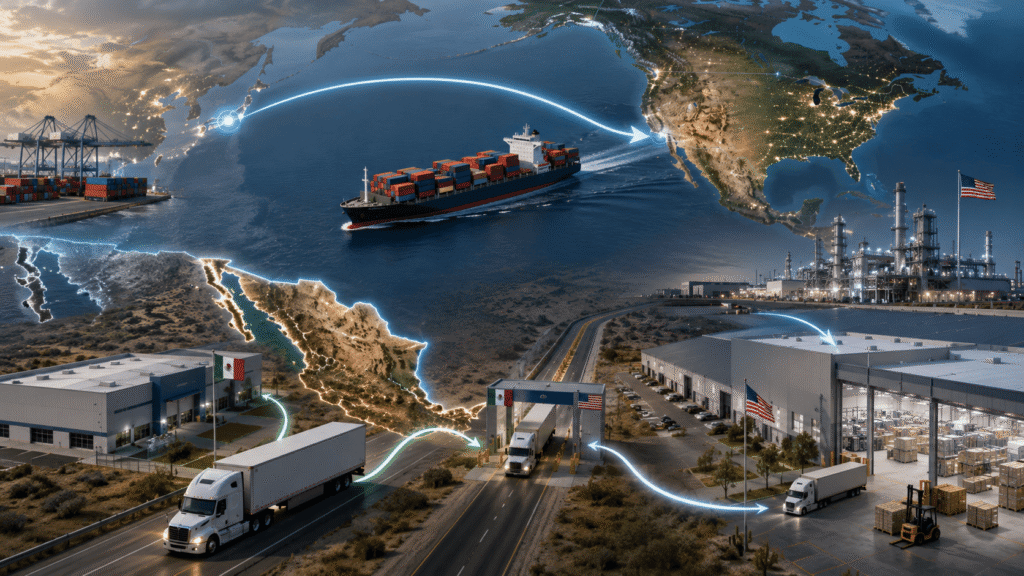
Mexico-based 3PLs are a growing nearshoring solution for U.S. businesses. The proximity of the two countries and favorable trade agreements like the USMCA encourage relocating production and distribution closer to home to boost supply chain resiliency and reduce lead times.
This has led to Mexico surpassing China as the U.S.’s top trading partner, intensifying demand for Mexico 3PLs and maquiladora services that leverage warehousing in duty-free import programs.
Strategically located in Tijuana, just 18 miles from downtown San Diego, California, and near major transportation lanes, Loginam extends its 20 years of experience in flexible warehousing, kitting, and pick and pack solutions that make B2B order fulfillment more streamlined and cost-effective.
Ready to up-level your B2B fulfillment? Contact Loginam today!
FAQs On 3PL Logistics
Asset-Based vs Non-Asset-Based 3PLs: What Do They Mean?
Asset-based 3PLs own physical assets, such as trucks, trailers, and warehouses. In contrast, non-asset-based providers arrange logistics services for shippers but do not own the physical equipment, instead relying on carrier networks, partner warehouses, and other third-party outsourced facilities. Today, the majority of providers employ a hybrid approach.
What Is 3PL Fulfillment?
3PL fulfillment is a core logistics process managed by a third-party logistics provider that handles everything from picking items from the warehouse shelves and securely packing them to preparing the final shipment for the customer. This service includes order management, ensuring accuracy, coordinating with carriers, and often managing returns.
What Is A 3PL Warehouse?
A 3PL warehouse is a facility operated by a third-party logistics (3PL) provider used for inventory storage and fulfilling orders for its clients. These warehouses also handle receiving, picking, packing, and shipping products, and are often strategically located to optimize distribution for the clients they serve.
What Is An Example Of A 3PL?
A common 3PL example is a fulfillment provider that stores your inventory, picks and packs orders, ships via carrier networks, and handles returns using systems like a WMS/TMS and integrations to your ecommerce platform or EDI. Depending on your model, that “example” could look like an ecommerce-focused fulfillment 3PL, a freight-forwarding 3PL managing multi-mode transportation, or a reverse logistics 3PL processing warranty returns and end-of-life products.
What Is 3PL vs 4PL Warehouse?
A 3PL typically runs the operation (warehouse, fulfillment, transportation, returns) and executes day-to-day logistics. A 4PL (often called a lead logistics provider) is more of a control tower, coordinating multiple logistics partners (including one or more 3PLs), designing the end-to-end strategy, and managing performance across the entire supply chain. In other words: 3PL = do the work; 4PL = orchestrate the system.
What’s The Difference Between 3PL Services And Drop Shipping?
Drop shipping is a retail fulfillment model where the supplier (manufacturer/wholesaler) ships each order directly to your customer, and you usually never hold inventory. 3PL services are outsourced logistics: you own (or control) the inventory, and the 3PL stores it, fulfills orders, and often manages shipping and returns on your behalf. Drop shipping optimizes for low upfront overhead; 3PL optimizes for control, consistency, and scale.
Is Amazon A 3PL?
In practice, yes, parts of Amazon operate like a 3PL. Programs such as Fulfillment by Amazon (FBA) and Multi-Channel Fulfillment (MCF) provide warehousing, pick-pack-ship, and sometimes returns support for third-party sellers, which fits the core definition of third-party logistics services.
Is FedEx Considered A 3PL?
FedEx is best known as a carrier, but FedEx also offers 3PL-type services through its supply chain and fulfillment offerings, including warehousing, order fulfillment, transportation management, and reverse logistics. So while “FedEx” isn’t only a 3PL, it can function as one depending on the service line you’re using.
When Should A Business Use A 3PL?
A 3PL starts to make sense when fulfillment volume, SKU count, or geographic reach outgrows your in-house capacity, or when you need to scale for peaks without committing to more space and headcount. It’s also a strong fit when your biggest wins come from focusing on product, marketing, and sales, while a specialist runs the operational complexity behind shipping and returns.
What Should You Look For When Choosing A 3PL?
Look for a 3PL that matches your reality: the right warehouse locations, proven workflows for your product type (B2B vs ecommerce, regulated items, returns-heavy categories), and clean systems integration (WMS/TMS visibility, EDI/ERP or ecommerce connectors). Just as important: clear SLAs, transparent pricing, and a track record of accuracy and communication, because logistics is a daily operating partnership, not a one-time project.